Let us also lay aside every weight, and sin which clings so closely, and let us run with endurance the race that is set before us, looking to Jesus, the founder and perfecter of our faith… Hebrews 12:1b-2a
Welcome to my goofy attempts to have Advent devotionals with my busy college students who now live in 3 different cities…
I want to look at anointer pointer from the Old Testament. This time we’re going to jump ahead to Exodus. In Exodus, we find the story of Moses, and a lot of historical things that happened but also spiritually significant things. Today I want to specifically focus on Exodus 12, which is the institution of the Passover.
At the Passover, God had the children of Israel take a lamb without spot or blemish. They slaughtered the lamb and they painted the doorposts and lintels of their houses with the blood. When the Destroyer saw the blood, he passed over their house.
Fast forward to the New Testament. When John the Baptist saw Jesus, he said, “Behold, the Lamb of God who takes away the sin of the world!”
The next day John saw Jesus coming toward him and said, “Look, the Lamb of God, who takes away the sin of the world! This is the one I told you about: ‘After me comes a man who ranks ahead of me, because he existed before me.’
John 1:29-30
You guys, when we are in this world without Jesus, we are enslaved to our sin. Anybody who has had an addiction knows this; we are slaves to sin.
Jesus came to set us free from that, but we have to submit to His blood. We have to cover ourselves with His blood, metaphorically – with His sacrifice – to know that we can be free.
The blood shall be a sign for you, on the houses where you are. And when I see the blood, I will pass over you, and no plague will befall you to destroy you, when I strike the land of Egypt.
Exodus 12:13
Genesis 22 records the time God told Abraham to do something shocking – to sacrifice Isaac, the son of the promise that he had waiting for for so long, and the one through whom all those blessings would come. And yet, Abraham was willing.
We also see Isaac was willing. Genesis 22 tells us that Isaac carried the wood, and if he was strong enough to carry the wood, he
Welcome to my goofy attempts to have Advent devotionals with my busy college students who now live in 3 different cities…
The LORD said to Abram: Go from your land, your relatives, and your father’s house to the land that I will show you. I will make you into a great nation, I will bless you, I will make your name great, and you will be a blessing. I will bless those who bless you, I will curse anyone who treats you with contempt, and all the peoples on earth will be blessed through you.
Genesis 12:1-3
Today we’re jumping ahead to Genesis 12, where God calls a man named Abram. He tells him to leave behind his father’s house, to go to a land God will show him. He tells him that He will make him a great nation, make his name great; He promises to bless all who bless him and curse those who curse Abram.
And He tells him the coolest thing: “Through you, all the nations of the earth will be blessed.” That promise points to Jesus.
Jesus was a descendant of Abraham, and through Him, all the nations of the earth are blessed. But the blessing is a gift that has to be accepted. If it’s rejected, there’s no blessing.
But if we accept the gift, then God calls us out of the pagan nations we live in (This is meant in a metaphorical sense. We don’t literally move out, but we turn our allegiance from worldly practices and cultural norms and turn to God) to follow Him to a Land He will show us someday.
We have to leave behind all the sin that clings so closely and walk in obedience to Jesus. Then through Him, we will be blessed for all eternity!
I will put hostility between you and the woman, and between your offspring and her offspring. He will strike your head, and you will strike his heel.
Genesis 3:15
In today’s 60-second devo, we’ll be in Genesis 3.
Genesis 3 records where Adam and Eve, the first man and woman, chose to disobey God’s one command. By doing so, they let sin and death into the world, unleashing a torrent of horrors caused by the ripple effects of all the sins of all the people throughout all the ages. All the evil we see in the world around us today – all the suffering, all the horror – can ultimately be traced back to that one event.
And right there in Genesis 3:15, God records this prophecy. He had a plan.
Now you and I, when we make a mistake, maybe we screw up a drawing or mess up a recipe, we’ll throw it out most of the time. But not God!
Of course the analogy fails because God didn’t make the mistake – people did. He had every right to destroy His rebellious creatures – but He didn’t.
Instead, He put a plan into place that was unbelievable. He Himself would come save the creation; the people He made in His image.
That plan is the hope of Advent.
My second goofy attempt to share daily devotions with my college kids.
And [Jesus] took the blind man by the hand and led him out of the village, and when He had spit on His eyes and laid His hands on him, He asked him, “Do you see anything?” And he looked up and said, “I see people, but they look like trees, walking.”
Mark 8:23-24, ESV
Healing the Blind
I love the Gospel accounts of Yeshua (Jesus) healing the blind because I know He’s in the same business today. For any who are willing, my Lord still heals spiritual blindness – a blindness far more profound than the mere absence of sight. Of all the blind men He healed, the one that resonates most with me is the healing recorded in Mark 8:22-25.
Distorted Vision
Mark’s account is singular in that Yeshua’s healing did not seem to “take” at first. This unnamed fellow’s sight did not immediately return. Instead, he began to see in stages, and his first glimpse of the world offered a distorted image of reality.
I can relate because I also began to see in stages after the Lord first touched me. He did not heal the abysmal spiritual darkness in me all at once. Instead, my first glimpses of the real world remained distorted by the lens of secular humanism I first embraced as a teenager.
The humanist worldview led me to view life as a silly option and death as the more logical choice. The more I saw through this murky lens, the darker life grew until blackness reigned unchallenged.
Worldview Breakdown
Secular humanism provides insufficient answers to questions of mankind’s purpose and meaning. Their efforts to touch these concepts lead in circles, much like Pooh and Piglet following their own tracks in the snow.
In adulthood, questions began to buffet me in the thick darkness of my chosen worldview:
If the end justifies the means, then why does my conscience prick me when I cause someone pain?
If mankind sets the standard for right and wrong, what man gets to set it?
When others use me and I feel wronged, am I right or are they?
When social standards change, does right and wrong change, too?
Is life built on such an unstable foundation as all this?
If man is the measure of all things, then what’s the point?
Why bother with life at all?
Years spent groping in this philosophical darkness brought no peace but only multiplied my confusion. And quite frankly, the longer I groped in this darkness, the less sense the humanist worldview made.
As I rode the fluctuating and unstable tide of humanistic morality, I knew deep inside there must be a true right and a true wrong. Without a changeless absolute truth, life was purposeless, chaotic, and ultimately meaningless.
The moral question became one of life or death for me.
Beginning to See
This is where Yeshua found me.
He began to heal my spiritual blindness, but at first I saw neither Him nor His truth clearly. Instead, I saw a distorted version of reality blurred by drab layers of humanistic philosophy. At the Lord’s first touch, I saw enough to know He was there although I saw Him only dimly.
It took several applications of the Word of Truth before I saw clearly. And what I discovered was the world, seen through the crystal-clear truth of the Maker of all things, =made a startling, stark sense.
What About You?
I don’t know where you stand, friend. I don’t know if you see Yeshua through His Word or if you see an obscure shadow of Him; a man like a tree walking around. But I pray He will heal you fully so you may see the beauty of the Light of the World and all He illuminates.
Sin. I want to talk about sin. Get your mind out of the gutter, ya perv.
Seriously, though, we really don’t talk much about sin anymore, and I think I know why.
As humans, we have an innate understanding of right and wrong. Over time, this understanding becomes twisted by our pride, distorted by repeated suppression, and is subject to a myriad of other deformations. Yet somewhere deep inside, we all know certain things are wrong – even if we only recognize them as a wrong when done to us.
They show that the work of the law is written on their hearts, while their conscience also bears witness, and their conflicting thoughts accuse or even excuse them
Romans 2:15
The general term for this understanding is conscience. And like any other human part, it can become scarred-over and calloused until there’s no feeling left.
Which brings us to today.
Instead of sin, we talk about things like lifestyle, my truth, or even illness. Much air is expended discussing our battles or our challenges. When confronted with wrongdoing, Christian influencers may confess their struggles. . . but not their sin.
It’s true we do go to battle against our sinful inclinations; we must struggle against temptation to sin. And yet, more often than not, the words are not used in this way but rather as a clever dodge to avoid responsibility. A struggle or a lifestyle is much more palatable than a willful crime.
What we’re missing in this subtle semantic waltz is the gravity of sin.
Sin is a killer. Period.
Sin is ugly. It is rebellion against the Maker; treason against the King; a refusal of the creation to perform its function as it was designed.
Sin lies. It cheats us of true life. It steals joy and covers it up in an endless, wretched pursuit of meager happiness and fleeting pleasure.
And no matter what name we give to make it sweeter to say, sin leads to death. In fact, death is what the sinner earns – as surely as you earn your paycheck from your employer.
For the wages of sin is death. . .
“But I’m not dead,” you may say, and perhaps you’re right. I wonder, though: can you honestly tell me you have a single relationship that hasn’t suffered a kind of death? Was any type of harm ever done to you by another person? Have you ever harmed another, even mildly?
Death of trust, death of respect, death of joy, of reputation, commitment, communication. Death everywhere we look, if we look with honesty. Even the cooling of affections is a kind of death.
Friends, this horror covers only one kind of death. The rot of sin goes far deeper than this.
. . . but the free gift of God is eternal life in Christ Jesus our Lord.
(Romans 6:23)
The good news is, we don’t have to accept death. We can talk about our sin; confess it, repent of it, and be set free in Christ. Expose the canker of sin to the fresh air of truth.
It may hurt, it may be embarrassing, but I can tell you from experience there is no cleaner pain. Like debriding an infected wound, the momentary torment is nothing compared to the relief of healing.
Let’s confess our sin to God our Healer and turn away in true repentance, trusting in the work of the Son of God to break the chains of sin and make us really free.
But now that you have been set free from sin and have become slaves of God, the fruit you get leads to sanctification and its end, eternal life.
I came to cast fire on the earth, and would that it were already kindled!
Luke 12:49
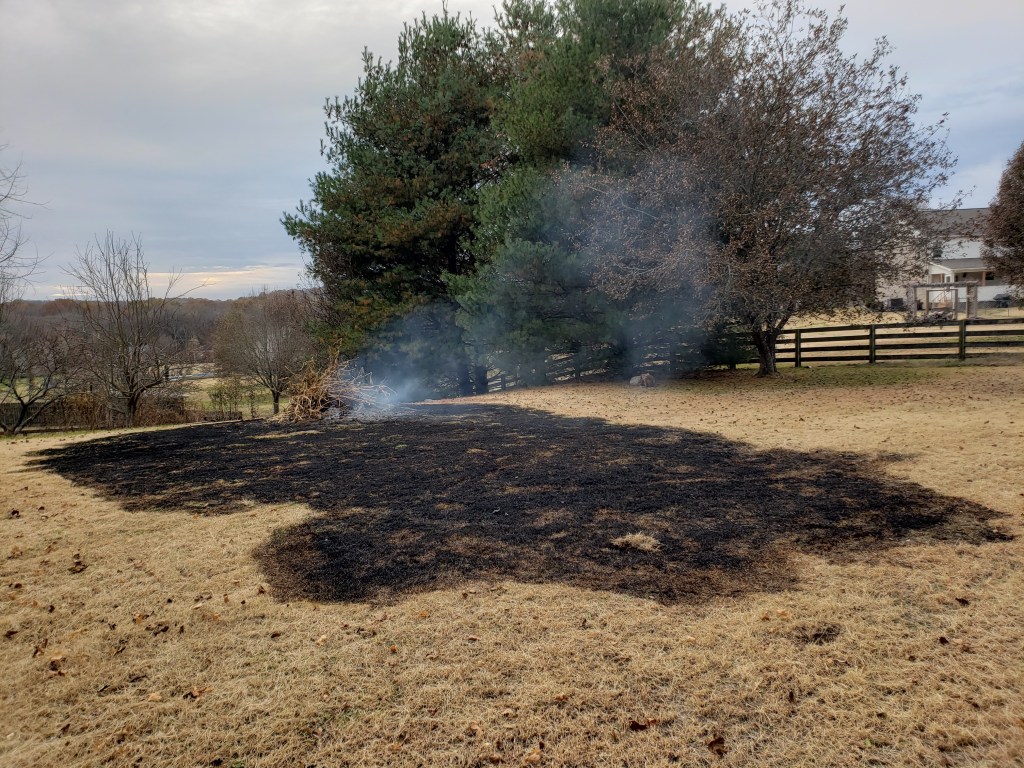
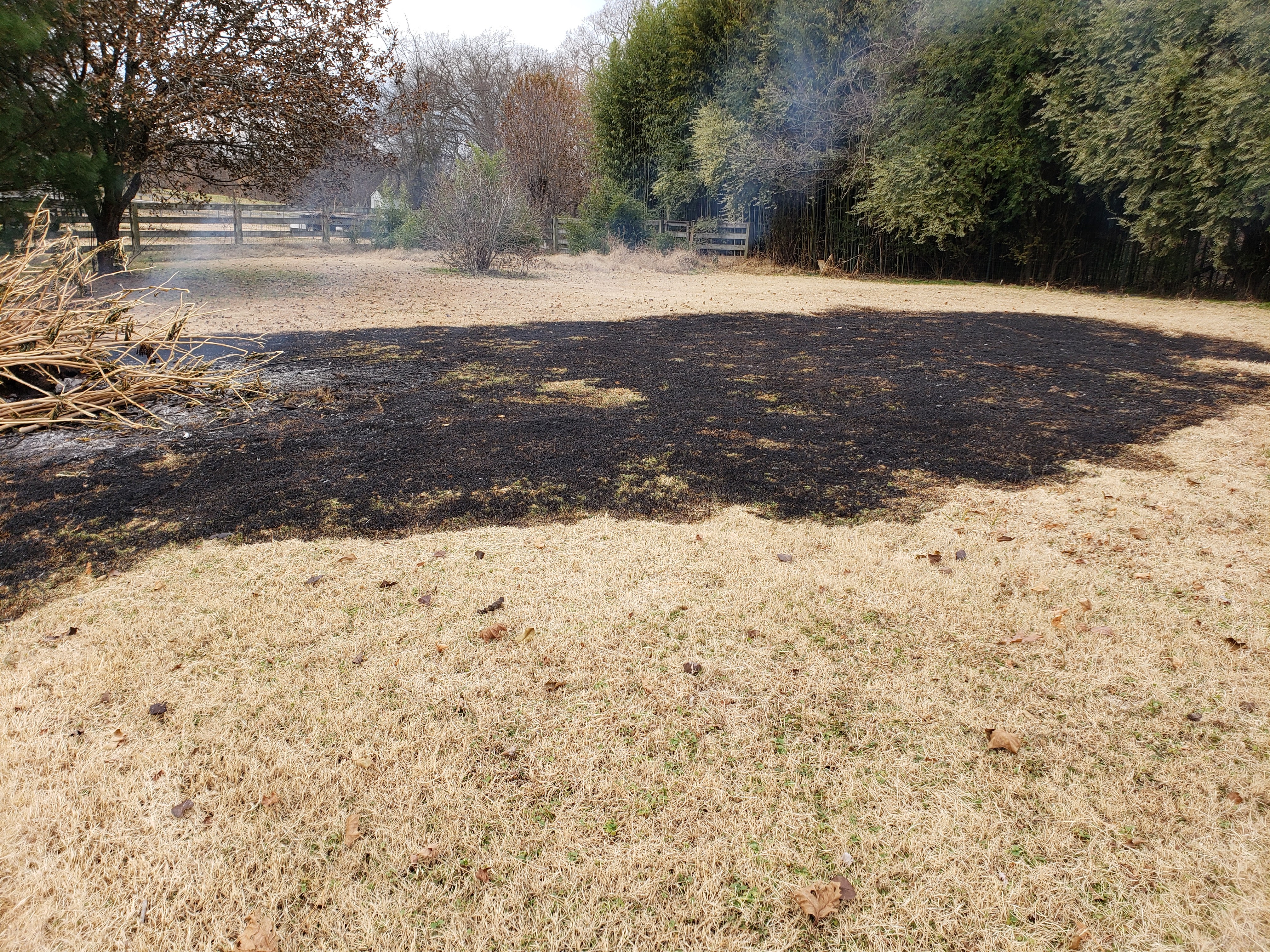
Here’s a random bit of personal trivia for you: I am the family fire starter. In younger years of camping, I would be the one to light the campfire. On our large lot, I am the one who is tasked with burning the debris from yard cleanup efforts.
Why? Because I like it. There’s something about starting and tending a fire which I find relaxing. It’s a slow, analog process in a frenetic digital world. Tending a fire leaves the mind free to contemplate all God made and to reflect on the lessons He’s stamped into His creation.
Kindling
At its inception fire can be finicky. Particularly in damp or less-than-ideal conditions, a new fire needs correct fuel in correct amounts and at regular intervals. Too much too quickly will smother it; too sparse and the flames will flare and rapidly expire. It also needs air and a little bit of coaxing in order to grow.
We tend to be like this in our walk with the Lord. At first, our zeal is feeble and finicky. We need to fuel it with intentional prayerful perusal of the Scriptures at regular intervals. In order for our little flickers of devotion to grow, we’ll also need the breath of the Spirit and a bit of coaxing.
Growth
As the flames grow and become established, larger portions of fuel are required. This is the sweet spot where the fire burns merrily and needs no coaxing but it is not yet large enough to need taming. Keep feeding it and enjoy the warmth.
In our walk with the Lord, we often reach a point where many of life’s mysteries begin to make sense in light of God’s Word. Truths about the world click into place as our understanding of God grows. We are capable of digesting larger chunks of the Word and our zeal has taken a life of its own and no longer requires as much external effort. We simply need to feed it and enjoy the warmth of God’s love.
Free-Burn
Once hot enough, fire is no longer picky about the fuel it consumes. Damp wood and even green plants will catch fire if dropped into the flames. At this point, more attention is needed to the surroundings. A stray gust of wind or a small explosion from a source like bamboo can cause sparks to fly. Anything dry and flammable nearby becomes a potential fuel source.
For the careless or distracted manager, it takes mere seconds for a controlled burn to become an impending threat. Even for an experienced pyrophile, a momentary failure to consider all the elements – fuel source, climate, conditions, surroundings – can turn a fruitful burn into a frantic effort to protect the house or treeline.
It’s important to maintain vigilance in our Christian walk, too. Our fallen nature means that the fire of zeal in our hearts will all too easily seize hold of the wrong fuel. Before we know it, our passion for the Gospel has devolved into fervent outspokenness about justice or freedom or 5-inch swaths of cloth. We lose sight of eternity and latch onto the temporary concerns of this world.
As charcoal to hot embers and wood to fire, so is a quarrelsome man for kindling strife.
Proverbs 26:21 (ESV)
We let our opinions drive the flames and we’re careless about the fuel we feed on. We gorge on the opinions of influencers, podcasts, and blogs rather than the very words of our Creator and spread little sparks into flammable arenas we should have tended with more care. Or we fail to notice the surroundings and enter into thoughtless exchanges of outrage rather than revealing the pure Light of the World we have lost sight of in the raging fires of misguided passion.
The consequences to out-of-control fire can be devastating if not stopped. So can the consequences of out-of-control and misdirected passions.
And the tongue is a fire, a world of unrighteousness. The tongue is set among our members, staining the whole body, setting on fire the entire course of life, and set on fire by hell.
James 3:6 ESV
This is important to remember in the climate of today. Most people are weary. Many are confused; many are angry. Now is our time to kindle a fire, but we who are in Christ MUST resist the impulse to feed the fires of fury and bewilderment. We need to kindle a fire of love and devotion to the One who is THE Way, THE Truth, and THE Life in a lost, deceived, and dying world.
This is not freedom to anything but rather freedom from; from the chains of sin and death. Freedom to begin living for eternity now, enjoying a peace with God that will last forever. This peace makes death no longer something to fear but a change to welcome, knowing that when this sin-corrupted flesh of ours expires, our truest and best freedom will begin.
This is the peace Christ Jesus – Yeshua Messiah – offers to all who will submit to His Lordship. This is the fire I want to kindle in me and in my family: A fire that will not decay but will burn steadily, consuming every impurity within and leaving behind all that I’ve built on the sure foundation of my King. A passion for truth, for true justice, for absolute joy, for the glorious presence of the King of kings.
Watch and pray that you may not enter into temptation. The spirit indeed is willing, but the flesh is weak.
Matthew 26:41
A friend once told me he’d prayed for God to take away the pain during a season of severe abuse and it didn’t work. The abuse – and the pain – continued.
Other people have prayed that a loved one would be healed from cancer or disease and still watched them die. Or for someone to be freed from addiction only to watch them waste away, enslaved to a substance.
So many people live out stories like this and conclude that prayer doesn’t work. And in strictly consumer terms, it doesn’t.
Prayer is not a thing like a soda machine or a streaming channel where you make your selection, enter your currency, and receive what you ordered. Prayer isn’t an order at all. A prayer can be a request, but in our native human selfishness, I think we forget that requests are not guaranteed.
I might request a raise from my boss and be denied; just as I might request God heal me from ME/CFS, but He might whisper instead, “My grace is sufficient for you, for my power is made perfect in weakness.”
But let’s imagine for a moment prayer did work like a vending machine. What currency would we use to pay for our purchase? Hmm… there’s a tricky one. Even if prayer did operate on the same principle, are we really willing to count the cost and ante up? Food for thought.
However, prayer is so much more than making requests from the Almighty. In our topsy-turvy way, our fixation on requests highlight the glaring truth of who we truly believe is in charge. But we are wrong; God is not our waiter. In reality, we should be the ones taking orders, not Him.
Other than our tendency to look at the situation backwards and upside down, there’s another point I want to make. To say prayer doesn’t work is equivalent to saying conversation doesn’t work.
Prayer, like conversation, only works if both parties are talking about the same thing. One major breakdown in prayer seems to occur because God is talking to us about eternity and how He designed us to operate and we are talking about feelings we can’t even define from moment to moment.
I mean, honestly, we aren’t doing very good with definitions these days anyway. How can we expect to understand the still, small whispers of Truth when we’ve convoluted simple observations of basic biology into intricate fantasy worlds? But that’s a different discussion…
Prayer does work. But it works on my heart and on my sin, not on my terms.
Rejoice always, pray without ceasing, give thanks in all circumstances; for this is the will of God in Christ Jesus for you.