Talk about Transformation: Jacob

This one is for the sisters who are going through Warren W. Wiersbe’s devotional, Becoming New together.

Day 15 of Wiersbe’s book touches on the life of Jacob, but I would encourage each one of you to read the patriarch’s entire story from his birth recorded in Genesis 25 at least through the death of his father Isaac at the end of Genesis 35. You can read it all in less than half an hour, and in this season of focusing on transformation, there’s a lot to be learned about the power of our gracious God from the life of this hesitant father of our faith.

Living up to His Name

At birth, Jacob was holding his brother’s heel and so was named Jacob1, (Hebrew: יַעֲקֹב ; transliterated Ya’akov). It wasn’t a particularly flattering name to give to a baby. Most Bibles have a note stating the name means “supplanter,” which seems a little odd. However, a brief word study reveals why. The word picture here is of a person seizing another by the heel, literally tripping them up in order to restrain, deceive, outwit, or by other nefarious means take their place.

And indeed, the young man lived up to his name. He tripped up his elder brother Esau twice while they were young men. First, he took advantage of Esau’s exhaustion (and an apparently cavalier attitude toward the traditional birthrights given to the firstborn son) by withholding a bowl of stew until Esau promised to sell his birthright to his younger twin for food2.

But Jacob didn’t stop there. At his mother’s urging, he also stole his brother’s blessing from their father by listening to the voice of his mother (not the first time a man fell by obeying the voice of a woman – there’s a lesson in this for us, ladies). This time, Jacob lied to his father, posing as Esau and taking great measures to deceive the blind old man for the sake of taking Esau’s place of prominence in their father’s pronouncement of blessing3.

Skeptics R Us

As if his conniving and scheming to take his brother’s place wasn’t enough, the young Jacob also shows signs of being a skeptic. Rather than associating himself with the Almighty, for years he refers to God as “the Lord your God4” (when talking with his father) or “the God of my father.5

Sadly, his skepticism isn’t based on anything but hubris. Jacob continued to avoid associating Himself too closely with God even after the Lord sent him a dream proclaiming Himself to He Who Supplants, even reiterating the covenant He made with Abraham and Isaac to the rascally Jacob6.

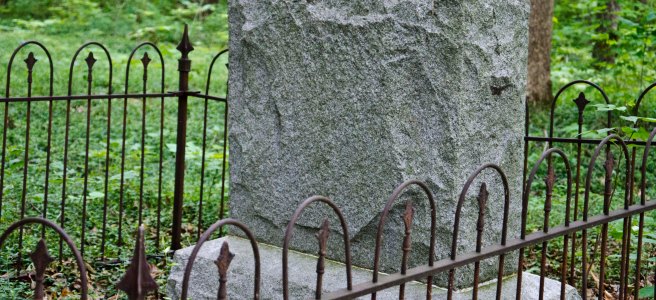
And did our antihero man up and submit to the Almighty who was promising him such astonishing mercy despite his life of lies? No! Instead, he set up the rock he’d used as a pillow (ouch) and made a provisional promise to the Most High God. “If God will do thus and so for me, then I will deign to call Him my God.7

It’s all quite humorous until we look deeply at our own motives, isn’t it? When have we also laid conditions on our Creator, pledging our fidelity to Him in exchange for prosperity or something else we desire? As if we have anything to offer the One who holds all things together; as if He needed us at all! But I digress… back to Jacob.

Reaping What Was Sown

Jacob travels on and falls head-over-heels for the lovely Rachel, hiring himself out to her father Laban for seven years in exchange for her hand in marriage8. But the crafty Laban has other plans – in the dark of the wedding night, he veils his older and plainer daughter Leah and sends her into the marriage tent in place of her sister9. Because wine flowed freely at wedding banquets and the only light sources were the stars and fires, it isn’t until morning that Jacob realized he’d been deceived. Oh, what goes around comes around! And it keeps coming.

Jacob promises Laban another seven years of service in exchange for his beloved Rachel. Thus, his household is established on a sisterly rivalry that could not have been pleasant10.

Let me take an aside to point out a fact: many non-believers will use this example (and others) to say “biblical marriage” includes sister-wives and their maidservants; in short, polygamy. However, if one actually reads the words of the text, what we see is that God used the sin of Jacob for His greater plan while simultaneously meting out the consequences of Jacob’s sin. The rivalry and bitterness of Jacob’s wives did yield a household of peace and joy. God did not bless these choices, but He did redeem them. That’s what He does. Speaking of redemption, let’s go back to Jacob.

Even in this mess of being used and tricked by Laban, God speaks to Jacob and offers him guidance11 – even though we have yet to see Jacob call God anything other than the God of his ancestors or build a single altar to worship the Lord (I don’t think a single stone and a conditional pledge counts as worship). And Laban continues to trick Jacob by attempting to circumvent his request for the speckled and spotted flocks12.

But God’s plan cannot be circumvented. His purposes are bigger than Jacob and his bickering wives, bigger than the supplanter and his supplanter, and bigger even than all of their sin. God’s plan stretches through this debacle to establish the Nation of Isreal through whom the Messiah would one day come… but that is much later.

Becoming Broken

Jacob spent twenty years reaping the discord he sowed in his childhood home, and finally he was able to break free from Laban. On his journey to return to his homeland, the bald truth of what he did to Esau finally hits him. Fear of reprisal from the brother he tripped up and replaced seizes him, and the man finally shows a little humility.13

And Jacob said, “O God of my father Abraham and God of my father Isaac, O Lord who said to me, ‘Return to your country and to your kindred, that I may do you good,’ I am not worthy of the least of all the deeds of steadfast love and all the faithfulness that you have shown to your servant, for with only my staff I crossed this Jordan, and now I have become two camps. Please deliver me from the hand of my brother, from the hand of Esau, for I fear him, that he may come and attack me, the mothers with the children (Genesis 32:9-11).

For the first time, we see Jacob in a posture of understanding that the blessings he schemed for are not blessings he deserves. His heart his humbled, even if it is humbled out of mere self-preservation.

And that night, he wrestles with God. It isn’t until after the wrestling match, which resulted in a permanent physical disability, that Jacob finally builds a proper alter and worships the Living God14. It took time, consequences, suffering, and fear, but Jacob finally worships the God who graciously allows him to become a part of the lineage of His Messiah, through whom God would offer redemption to the whole world.

There’s much more to Jacob’s story than this overview. His wife Rachel stole her father’s household gods, and Jacob doesn’t rid his own household of this abomination until after the rape of his daughter Dinah and his sons’ over-the-top revenge.

My point? Jacob was not a perfect man by any stretch of the imagination. Yet he was a man transformed by God. What we see in Jacob is a solid reminder of the astonishing mercy and renewing power of our Living and Loving God. He uses our own bad choices to humble us, and yet there is no one out of reach of His redeeming grace.  

  1. Genesis 25:26 ↩︎
  2. Genesis 25:29-34 ↩︎
  3. Genesis 27 ↩︎
  4. Genesis 27:20 ↩︎
  5. Genesis 31:5, et al ↩︎
  6. Genesis 28:10-15 ↩︎
  7. Genesis 28:20-21 ↩︎
  8. Genesis 29:16-19 ↩︎
  9. Genesis 29:22-25 ↩︎
  10. Genesis 29-30 ↩︎
  11. Genesis 31:10-13 ↩︎
  12. Genesis 30:34-36 ↩︎
  13. Genesis 32:6-12 ↩︎
  14. Genesis 33:20 ↩︎

Choosing Life

Moses was nearing the end of his substantial ministry, preparing to hand leadership off to Joshua, and getting the descendants of Israel ready to take possession of the land promised to Abraham many generations before. In light of his, Moses had just finished reiterating the entire covenant between God and His chosen people so they would go in with a clear understanding of what it looked like to keep their end of the promise. In short, Moses offered them a choice between life and death.

I call heaven and earth to witness against you today, that I have set before you life and death, blessing and curse. Therefore choose life, that you and your offspring may live, loving the LORD your God, obeying his voice and holding fast to him, for he is your life and length of days…
(Deuteronomy 30:19-20)

Note: I highly recommend reading all of Deuteronomy 30, but this is the gist.

Today, of course, believers are under a new covenant promise; a covenant bought and sealed by the priceless blood of the Divine Lamb of God who lived out that perfect obedience to God’s covenant law, laid down His life to pay the penalty for our rebellion, and took His life up again so all who put their trust in the sufficiency of His sacrifice may be set free from slavery to sin.

Because of Jesus and His sacrifice, we are given an opportunity at a new life, being remade in Him. Further, His gift of the Holy Spirit makes it possible for us to choose life. Yet obedience is still necessary for us. Indeed, Jesus equates our love for Him with our obedience to His commands many times in John 14.

Whoever has my commandments and keeps them, he it is who loves me. And he who loves me will be loved by my Father, and I will love him and manifest myself to him.”
(John 14:21)

And while it is popular in some circles to say we are “free from the law,” it is more accurate to say we are free from certain specific constraints of the first covenant meant for Israel before the first advent of her Messiah. We are not free to do as we wish; certainly if we belong to Jesus, we are not free to sin but free to escape from sin.

We are still liable to a moral law, one which Jesus actually accentuates rather than diminishes. For example, Jesus not only says we should not commit adultery, but that we should not even look lustfully at another person. He doesn’t just say, “Don’t murder,” but instructs us not to be angry with our brother – in fact, to love our enemies and pray for those who persecute us. He calls us not to mere obedience but perfection (see Matthew 5:21-48).

This is what I want to hone in on. When it comes to a modern understanding of sin and obedience, I think we get a little confused. We look at a specific sin and think, “Well, at least it’s a small sin. It’s not something really bad, like murder.”

Or we hold our sin up against cultural norms and think it used to be sin but maybe it isn’t anymore. Perhaps God changed His mind, or maybe humans have progressed in our understanding of sin, or maybe it’s simply outdated to think of certain actions as sinful.

We think we’re comparing good and bad or better and best. But in reality, we are still comparing life and death.

Even though Moses was talking to an ancient people about a specific covenant between their nation and a holy God, the principle of what he says still remains. Brothers and sisters, when we weigh obedience to Christ’s holiness against conformity to our culture, we are still choosing between life and death, blessing and curse.

For the love of the One who gave all so we might have His righteousness, and also because I love and care about your eternal well being, my friends, I implore you: choose life.

Jesus Didn’t Come for the Righteous

. . .He said, “Those who are well have no need of a physician, but those who are sick. Go and learn what this means, ‘I desire mercy, and not sacrifice.’ For I came not to call the righteous, but sinners.”
(Matthew 9:11-13)

The above statements by Yeshua (Jesus) were made shortly after He called a man named Matthew to follow Him. Because Matthew was both Jewish and a tax collector employed by Rome, he would have been vilified as a contemptable sell-out by his fellow Israelites.1 Without a doubt, Matthew was as shocked at the Master’s call as the other disciples, who were probably wondering, Why is the Lord asking a traitor to join us?

Whatever their response, we know at some point after Matthew left his tax booth to follow the Messiah, Yeshua was found dining with other tax collectors and socially unacceptable sinners. The Pharisees did not care for His choice of companions and voiced their disdain. It was at this point my Lord offered His subtle rebuke in the form of a reference to Hosea 6:6: “I came not to call the righteous, but sinners.”

In the rabbinical style of His time, the Lord intended to point them not only to the specific verse, but the entire passage (probably Hosea 6:4-10). It is worthy of note here to point out the English translation is not exact, but bear in mind Matthew’s Gospel account was written in Greek; Hosea penned in Hebrew; and the conversation probably happened in either Hebrew or Aramaic – just in case you were wondering why it doesn’t appear to be a direct quote.

What shall I do with you, O Ephraim? What shall I do with you, O Judah? Your love is like a morning cloud, like the dew that goes early away. . . For I desire steadfast love and not sacrifice, the knowledge of God rather than burnt offerings. But like Adam they transgressed the covenant; there they dealt faithlessly with me.
(Hosea 6:4, 6-7)

Do you see it? Yeshua is not only making clear His mission – to call sin-sick sinners to spiritual health – but He is reminding these wayward leaders of their own faithlessness. The quoted statement forces the hearer to decide which category he falls into. Am I righteous? Or a sinner?

Anyone as conversant with the Text as the Pharisees were, would know that Psalm 14:2-3 declares there is “none who does good, not even one,” and many of the proverbs discuss God’s abhorrence of human pride (see Proverbs 8:13, 16:5, et al).

Not to mention that to declare oneself righteous is as bold an act of hubris as can be imagined.

Matthew doesn’t record the Pharisees’ response to this challenge, but I doubt it was positive. In several other places, Matthew points out how this sect accused the Lord of casting out demons through demonic means, sought to destroy Him, and eventually conspired to have Him killed.2 Thus, it’s no leap of logic to assume they weren’t thrilled at His rebuke. After all, they were prominent religious leaders! How dare this young upstart presume to reproach them?

Hm. Indeed.

The thing is, it’s easy for us to fall into the habit of thinking, Oh, those awful Pharisees, roll our eyes, and quite miss the point.

Yeshua’s question is for us, too. Am I righteous? Or a sinner?

Do we, in living-color-lived-out truth, comprehend the gravity of our sin and our desperate need for the Messiah’s imputed righteousness? Or do our lives reflect smug complacency in our own decency?

When we read these accounts in our Bibles, it’s an easy thing to read as a bystander, observing without participating in the unfolding narrative. Yet the entire purpose of God’s Word is to teach us about Him and draw us to Him by showing us the path carved through the very flesh of His only Son.

If there were any other way to breach the chasm between our sinful selves and the holiness of the Most High God, Yeshua’s prayers in Gethsemane would have concluded without His betrayal by one of His close companions and the road to Golgotha.

We can never be righteous enough to counterbalance our sin. There are no Divine scales of justice where each bad deed weighs down one side while every good deed is placed on the opposite. There is only the living death of sin and the eternal life offered through the Messiah.

To be blunt, we all fall into one of two categories:

  1. Those who do not belong to Yeshua, who are walking dead just waiting for the animation of our bodies to cease, or
  2. Those who do belong to Him and have already begun the eternal journey that will continue once these temporary bodies wear out and are traded in for our eternal ones.

So when you read His words to the Pharisees, it’s worth a heart check. Have you been trusting in your good works, or have your good works been the grateful overflow of a life rescued from death through surrender to the Lord Jesus Christ, Yeshua Messiah? Are you a recalcitrant miscreant relying on self-sufficiency? Or have you repented – made a 180o turn – leaving desire for sin at your back and making steps closer to the glorious Savior?

In fact, are you one of the sinners He came to call?

I know I am, and I’m blessed to call Him both Master and Lord. I pray you will come to Him, too, and we can glorify Him both now and for time out of mind.

  1. See “Why Exactly Were Tax Collectors So Hated?” and “Monetary System, Taxation, and Publicans in the Time of Christ,et al. ↩︎
  2. See Matthew 9:32-32; 12:14; 12:22-24; 22:15; et all ↩︎

What If?

Reading through one of my (admittedly many) favorite biblical stories today – the story of Joseph – caused me to reflect on my own selfishness. Too often in my walk with the Lord, I’ve asked the wrong questions, particularly when things don’t go the way I think they ought. But what if instead of placing myself at the center of the story, I accepted all events as part of the unfolding plan of the Faithful God?

Know therefore that the LORD your God is God, the faithful God who keeps covenant and steadfast love with those who love him and keep his commandments, to a thousand generations…

Deuteronomy 7:9

What if I recognized that I am only one of billions of elements incorporated into His composition – a design so intricate and far-reaching, the first stroke was laid ages before my birth; a masterpiece encompassing more details than my mind can fathom spanning the breadth of eternity? What if I simply trusted the Almighty’s sure hand instead of wrapping myself in faithless despair at the first glimpse of a speck of darkness?

In fact, what if all of us who claim Yeshua Messiah (Christ Jesus) as our Lord laid down our limited understanding and trusted in His limitless sovereignty?

Now that would be something indeed.

So Joseph said to his brothers, “Come near to me, please.” And they came near. And he said, “I am your brother, Joseph, whom you sold into Egypt. And now do not be distressed or angry with yourselves because you sold me here, for God sent me before you to preserve life.

Genesis 45:4-5

I’m reminded by Joseph’s words that my story isn’t really mine. The little length of my life is less than a fleck of paint in the Creator’s magnum opus.

I can make myself miserable by questioning events so far beyond my purview, I wouldn’t understand them fully even if the Eternal One let me in on the wheres, whys, and hows. Or I can be at peace, resting in the goodness of the One who does know, and humbly performing the tasks, no matter how trivial, He gives me to do each day.

Keeping my eyes on my troubles and inviting doubt and misery, or fixing my eyes on the Lord and embracing trust and peace.

It’s not a difficult choice when broken down into the simplest elements.

90 Second Devotional | December 15

Welcome to my goofy attempts to have Advent devotionals with my busy college students who now live in 3 different cities…

And Melchizedek king of Salem brought out bread and wine. (He was priest of God Most High.) And he blessed him and said, “Blessed be Abram by God Most High, Possessor of heaven and earth; and blessed be God Most High, who has delivered your enemies into your hand!” And Abram gave him a tenth of everything.

Genesis 14:18-20

Melchizedek is an interesting figure who first appears in Genesis chapter 14. At this point in history, Abram had just rescued his nephew Lot from Chedorlaomer, one of many kings who had gone to battle against the king of Sodom. After the victory, Abram goes to meet the king of Sodom in a valley when he is approached by Melchizedek, who is is described as the king of Salem, a priest of the Most High God. Melchizedek brings out bread and wine, blesses Abram, and Abram gives him a tenth (or tithe) of all he has.

Now if we look at these terms, Melchizedek in Hebrew literally means “my king is righteous.” Salem, or sha-lame in Hebrew, is obviously related to shalom – peace. So we have my king is righteous, king of peace, priest of the Most High God.

Psalm 110 also mentions Melchizedek and is considered by many be a Messianic psalm. It says in verse four: “The LORD has sworn and will not change his mind, ‘You are a priest forever after the order of Melchizedek.'” The writer of Hebrews, in chapter 7, also mentions Melchizedek and digs into the meanings behind the names among other things.

But what I want to look at is the fact that this king – my king is righteous, King of Peace – offered bread and wine to Abram.

I can’t help but think of Jesus, who at the Last Supper, took the bread, broke it after giving thanks, passed it around, and said, “Take and eat; this is my body;” and He took the cup of wine and blessed it, saying, “This is my blood of the covenant, poured out for many for the forgiveness of sins” (see Matthew 26:26-28, et al). He ordered us to do this in remembrance of Him.

Our King is righteous, and He has done so much for us. It’s my prayer that you will know Him as your King of Peace, the King who is righteous, this holiday season and forever after.

90 Second Devotional | December 14

Welcome to my goofy attempts to have Advent devotionals with my busy college students who now live in 3 different cities…

But you, O Bethlehem Ephrathah, who are too little to be among the clans of Judah, from you shall come forth for me one who is to be ruler in Israel, whose coming forth is from of old, from ancient days. . 

Micah 5:2

Micah 5:2 records yet another prophecy of the Messiah. In it, His birthplace is declared – a town called Bethlehem. In Hebrew, בֵּית לֶ֫חֶם means House of Bread. It’s fascinating to me that the Lord would be born in a town by this name because in John 6:35, Jesus refers to Himself as the Bread of Life.

And He is the Bread that nourishes, sustains, and makes eternal life possible. All other bread gives only temporary sustenance. He alone can satisfy entirely and eternally.

Interestingly enough, John 6:22-59 records one of the most difficult teachings Jesus gave to the people, in part because it was incredibly offensive. There’s a lot behind His talk of eating His flesh and drinking His blood – much more than I can go over in the space of 90 seconds. For brevity’s sake, think about the old saying, “You are what you eat.”

If we literally take the life of Jesus into ourselves, letting Him be our source of life and let His life become the driving force of our own lives – literally letting Him transform us to be more like Him – I believe that’s the gist of what He was saying. Many people left Him after this and just walked away.

My question to you today is this: what do you do with the hard teachings of Jesus? Do you scoff and turn away? Or do you, like Peter in verse 68, say, “Lord, to whom should we go? You have the word of eternal life…”

60 Second Devotional | December 13

Behold, the days are coming, declares the Lord, when I will raise up for David a righteous Branch, and he shall reign as king and deal wisely, and shall execute justice and righteousness in the land. . .  And this is the name by which he will be called: ‘The Lord is our righteousness.’

Jeremiah 23:5-6


Jeremiah 23 holds another prophecy of the Messiah. Again, He is referred to as a descendant of David, as a King, and another name is given – the Lord is our righteousness.

This is hard news for those of us who believed we could be good people, good enough to tip the scales of eternal justice in our favor. We can’t. But what we can do is follow God’s plan – the rescue plan He made from the beginning – and accept His Messiah, the Lord, as our righteousness.

But how?

There are several passages of Scripture that talk of putting on Christ – Ephesians 4:20-24, Romans 13:14, and Galatians 3:27 to name a few. The idea here is that we are naked and exposed before the Throne of Divine Justice. All we’ve done, all those times we’ve forcibly silenced the voice of our conscience and done what we know to be wrong, completely unmasked.

But that is not the way you learned Christ!— assuming that you have heard about him and were taught in him, as the truth is in Jesus, to put off your old self, which belongs to your former manner of life and is corrupt through deceitful desires, and to be renewed in the spirit of your minds, and to put on the new self, created after the likeness of God in true righteousness and holiness.

Ephesians 4:20-24

Then Christ comes, the One who died to pay the price for us, and if we accept His help, He covers us with His righteousness like a cloak of dignity. His dignity. But we have to accept it and put it on.

By doing so, we implicitly agree to honor His righteous name as well.

But put on the Lord Jesus Christ, and make no provision for the flesh, to gratify its desires.

Romans 13:14

85 Second Devotional | December 12

Welcome to my goofy attempts to have Advent devotionals with my busy college students who now live in 3 different cities.

For to us a child is born, to us a son is given. . . and his name shall be called. . . Prince of Peace.

Isaiah 9:6

Peace is something that seems elusive to most of us in the modern world. After all, we can hardly escape the constant barrage of information, and most of us are now so accustomed to the incessant yammering of the media that we don’t even pay attention.

Another scandal involving high-ranking officials? Of course.

Government corruption exposed yet no one serves jail time. Naturally.

We’ve come to expect chaos, even embrace it. But the expectation comes at a cost. The US consistently ranks #1 or #2 for anxiety, depression, and substance abuse despite being the most affluent nation in the world. Money, it seems, does not buy us peace.

Sadly, as a nation we’ve rejected the Prince of Peace. Fewer Americans each year identify as Christian and of those who do, even fewer actually read the Bible or follow the teachings of the Christ they claim to serve. A 2019 Lifeway research study found evangelicals are far more likely to use social media daily than read their Bibles.

Yet in chapter 26, Isaiah writes, “You keep him in perfect peace whose mind is stayed on you, because he trusts in you. Trust in the LORD forever, for the LORD GOD is an everlasting rock” (Isaiah 26:3-4).

We lack peace because we no longer truly trust in the Prince of Peace. But we can choose to change this. Will you?

60 Second Devotional | December 10

Welcome to my goofy attempts to have Advent devotionals with my busy college students who now live in 3 different cities…

. . .and his name shall be called. . . Mighty God, Everlasting Father. . .

Isaiah 9:6

In Isaiah 9:6, the Messiah is also called, “Mighty God, Everlasting Father.” It’s interesting that many skeptics today claim Jesus never pretended to be God. And they’re right – He didn’t pretend. He knew it, He stated it, and He proved it.

In John 8, Jesus is teaching at the temple, and His teachings about being slaves to sin rubs some people wrong. They push back, calling Him a Samaritan (which would have been insulting to a Jewish man) and accusing Him of having a demon. In a bizarre refutation that they’ve ever been slaves, they invoke Abraham as their father.

To this, Jesus replies that Abraham saw His day come and was glad. This brings on jeers, and Jesus makes the bold claim, “Before Abraham was, I am.”

Jeers turned to rage as the crowd attempted to stone Him. They knew He was referring to Exodus 3:14 and making a claim to Divinity.

Another time, Jesus is at the Feast of Dedication being questioned at the temple by a crowd demanding to know if He is the promised Messiah. He tells them, “I and the Father are one,” but they are also discontent with His answer (see John 10:22-33).

But Jesus not only claimed divinity, He proved it. He lay down His life down but also took it up again, precisely as He promised He would do in John 10:18.

60 Second Devotional | December 9

Welcome to my goofy attempts to have Advent devotionals with my busy college students who now live in 3 different cities…

For to us a child is born, to us a son is given; and the government shall be upon his shoulder, and his name shall be called Wonderful Counselor. . .

Isaiah 9:6

Today we are going to linger in Isaiah 9 and look at verse 6, specifically the prophecy that Messiah would be called Wonderful Counselor.

And Jesus is this Wonderful Counselor, though the advice He gives is very different from what you’ll get in the rest of the world. We are surrounded by advice to follow our hearts, to do what makes us happy, to live our truth, and all kinds of advice that sounds good on the surface. But anyone who’s tried to keep this advice, like I once did, will eventually end up feeling empty, unfulfilled, and even despondent.

The counsel Jesus gives is different. in the sermon on the mount, He warns us against laying up for ourselves treasures on earth where moth and rust destroy and thieves break in and steal, but advises us instead to store treasure in heaven where it will be secure.

Do not lay up for yourselves treasures on earth, where moth and rust destroy and where thieves break in and steal, but lay up for yourselves treasures in heaven, where neither moth nor rust destroys and where thieves do not break in and steal. For where your treasure is, there your heart will be also.

Matthew 6:19-21

When we invest in a world that is doomed to pass away, we make a poor investment. But when we invest in Jesus and His eternal kingdom, our investment will pay dividends for all eternity.