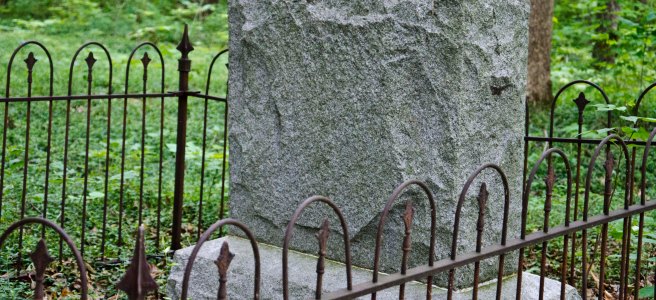
Choice and Consequence: A True Story

It happened in the spring of 2000; the moment that changed the trajectory of my life. I was in my mid-20s; an aimless young woman with no real plans. At the time, I was an avowed atheist and had bought into the pervasive lies hookup culture sold my generation at bargain prices, choosing to treat sex as a mundane social transaction. And now I was faced with the consequences: two dark pink lines proclaiming a positive pregnancy test, and the man I’d known for about a month waiting in the living room for the results.

Those lies were not such a bargain after all, it would seem.

I was terrified. This was NOT a good time for me to have a baby. I barely knew the father; had no idea if he would run the other way, if he would stay but turn out to be yet another abusive man, or how he would react.

Moreover, I was a waitress – a gig initially intended as gap year so I could decide what I wanted to do with my life. But the life decision had been postponed again and again until nearly a decade had passed. A decade I’d squandered either working as many hours as my bosses would allow or self-medicating my wounded heart with alcohol.

The job let me pay my bills, but there wasn’t a lot extra. Besides, waiting tables wasn’t exactly a family-friendly job, and having a baby would end the vague idea I had of going back to school and finishing my degree. To make matters worse, I didn’t think I was very maternal. I was deeply selfish, carried profound emotional scars, and often drank myself to sleep mainly because it seemed better than crying myself to sleep. I was a mess, not mother material.

I knew abortion was an option, but it was not an option for me.

That’s right. Even then – at a time when I rejected God, when my entire life revolved around my silly little self, and I had every reason in the world to choose it- abortion was not an option. Not even considered.

The reason was that I knew I could never live with myself after killing my child; knew I would spend the rest of my life wondering what he or she would have looked like. Knew I would see a kid at a grocery store and think, My kid would be about this age now, until it drove me deeper into the darkness that already consumed most of my heart.

So I kept the baby, and it was the best decision I ever made.

I was in love with my son the first time I felt him move, and he brought light and joy and fullness into the drab misery of my life. My aimless life now had purpose and meaning. I was someone – I was Mommy. I loved it more than I ever thought possible. And through the sudden responsibility of caring for a helpless tiny person, my hard heart was finally open to the God who created me. My life was saved in more than one way.

Why am I telling this story? Because I believe there is someone out there who needs to hear it. There are far too many women who have bought the lie that abortion is healthcare. It is not.

Merriam-webster.com defines healthcare as “efforts made to maintain, restore, or promote someone’s physical, mental, or emotional well-being especially when performed by trained and licensed professionals.”

By this definition, prenatal care is healthcare. So is caring for the needs of the growing fetus, childbirth, post-natal care, neonatal care, and caring for a woman who has suffered a miscarriage.

But killing a living being, no matter how small, is not healthcare. Nor is abortion a decision without consequences.

Before I go on, let me say a word to any woman reading this who has already made the fatal choice and is now coping with the emotional fallout you probably didn’t expect. There is hope for you, sweet one. There is a God who loves you and who forgives; a God who sent His Son to die and pay the penalty for our sin so we can be free to choose to reject sin and follow His way instead. Come to Jesus and find rest for your soul. He may not take away the crushing pain, He will not remove the consequences of poor choices, but He will redeem them nonetheless. He is good, and if you turn away from sin and self and turn to Him, He will soothe the ache in your heart and make you whole again. Stop reading my words and start reading God’s Word with a prayer for help in your heart. He will answer, if not in the way you may expect.

For those who are on the fence, please read on. There is a life at stake here.

Whether you believe it or not, there is a grave spiritual damage done when a child is destroyed by the one person who ought to love him most. The spiritual damage is unavoidable, and there is only one cure – surrender to Jesus Christ as Lord.

Then there’s the oft-suppressed fact that abortions actually can damage a woman’s physical health, even if it isn’t common. But what is common is the damage to her emotional health.

A woman may build up callouses on her conscience in order to cope with her selfish choice, true. But I’ve been pregnant and felt the stirring maternal emotions even in the weeks before I felt the baby move. The mother instinct is powerful. I still carry mom-guilt for careless words I said to my toddlers. I cannot imagine the guilt I would carry had I decided to kill one of them before they were born.

I desperately want to save women from swallowing this barbed lie and suffering the invisible, eternal scars it leaves. I literally shed tears when I think of it – not only for the babies who will never get to laugh, but for the mothers who will never get to hear that most wonderful of sounds.

I weep for the women who have been damaged by the moneymaking industry of abortion clinics.

So my sweet sisters, please, don’t buy the lie of, “My body, my choice.” The day I stared down at the two pink lines, I knew I’d already made my choice. The child growing inside me came about because of my choices and deserved the chance to make his own.

Even as an atheist, I knew this much. This is what the last twenty-four years of propaganda has chipped away at – the common sense understanding that a baby is a human being even at the very earliest stages.

Besides, it isn’t your body you are aborting – it is a body belonging to someone else. A fetus is genetically distinct from its mother because it is a unique human being. It is not a bit of amorphous protoplasm that might become a catfish or a cow; it is a growing and developing person in a very early stage.

That tiny, growing person deserves a chance to make his or her own choices, both good and bad. And ladies? You deserve the chance to watch them choose; to watch them learn and grow, succeed and fail, laugh and cry and live.

Behold, children are a heritage from the LORD, the fruit of the womb a reward (Psalm 127:3).

If we confess our sins, he is faithful and just to forgive us our sins and to cleanse us from all unrighteousness (1 John 1:9).

Choosing Life

Moses was nearing the end of his substantial ministry, preparing to hand leadership off to Joshua, and getting the descendants of Israel ready to take possession of the land promised to Abraham many generations before. In light of his, Moses had just finished reiterating the entire covenant between God and His chosen people so they would go in with a clear understanding of what it looked like to keep their end of the promise. In short, Moses offered them a choice between life and death.

I call heaven and earth to witness against you today, that I have set before you life and death, blessing and curse. Therefore choose life, that you and your offspring may live, loving the LORD your God, obeying his voice and holding fast to him, for he is your life and length of days…
(Deuteronomy 30:19-20)

Note: I highly recommend reading all of Deuteronomy 30, but this is the gist.

Today, of course, believers are under a new covenant promise; a covenant bought and sealed by the priceless blood of the Divine Lamb of God who lived out that perfect obedience to God’s covenant law, laid down His life to pay the penalty for our rebellion, and took His life up again so all who put their trust in the sufficiency of His sacrifice may be set free from slavery to sin.

Because of Jesus and His sacrifice, we are given an opportunity at a new life, being remade in Him. Further, His gift of the Holy Spirit makes it possible for us to choose life. Yet obedience is still necessary for us. Indeed, Jesus equates our love for Him with our obedience to His commands many times in John 14.

Whoever has my commandments and keeps them, he it is who loves me. And he who loves me will be loved by my Father, and I will love him and manifest myself to him.”
(John 14:21)

And while it is popular in some circles to say we are “free from the law,” it is more accurate to say we are free from certain specific constraints of the first covenant meant for Israel before the first advent of her Messiah. We are not free to do as we wish; certainly if we belong to Jesus, we are not free to sin but free to escape from sin.

We are still liable to a moral law, one which Jesus actually accentuates rather than diminishes. For example, Jesus not only says we should not commit adultery, but that we should not even look lustfully at another person. He doesn’t just say, “Don’t murder,” but instructs us not to be angry with our brother – in fact, to love our enemies and pray for those who persecute us. He calls us not to mere obedience but perfection (see Matthew 5:21-48).

This is what I want to hone in on. When it comes to a modern understanding of sin and obedience, I think we get a little confused. We look at a specific sin and think, “Well, at least it’s a small sin. It’s not something really bad, like murder.”

Or we hold our sin up against cultural norms and think it used to be sin but maybe it isn’t anymore. Perhaps God changed His mind, or maybe humans have progressed in our understanding of sin, or maybe it’s simply outdated to think of certain actions as sinful.

We think we’re comparing good and bad or better and best. But in reality, we are still comparing life and death.

Even though Moses was talking to an ancient people about a specific covenant between their nation and a holy God, the principle of what he says still remains. Brothers and sisters, when we weigh obedience to Christ’s holiness against conformity to our culture, we are still choosing between life and death, blessing and curse.

For the love of the One who gave all so we might have His righteousness, and also because I love and care about your eternal well being, my friends, I implore you: choose life.

Darkness, Light, and Subjective Morality

As our 8:45 p.m. flight took off, I watched the ground fall away through the airplane window. The ambient brightness of the city at ground level faded quickly. Night encroached. In my bird’s-eye view, large pools of light pushed back the darkness as we gained altitude, soaring over stadiums, shopping malls, office complexes, and street lights. The further from the city we journeyed, the more feeble the pools of light became and the more prominent the surrounding darkness grew. An apt visual metaphor for subjective morality.

We were heading home from a brief visit with family members who do not have (so far as I can tell) a thriving relationship with the living God. During the visit, I was told about the kids’ “religious classes,” and one of said kids informed me on Sunday, “We don’t have to go to church.” God’s name was invoked in the standard secular way along with a string of other words my husband and I have allowed the Holy Spirit to excise from our vocabularies.

But more telling was the fruit. The desperate striving to be a “good person” on a sliding scale of virtue. Anger when one has been hurt by the actions of another, but justifying similar actions in oneself.

I hate him because of what he did to me; when I did it, it was for a good reason. It was different.

Justice struggling to find footing on an unstable, convulsing foundation of right vs. wrong. A steady undercurrent of fear and uncertainty and thinly-veiled shame. Palpable darkness seeping in at the edges.

It’s a world I used to embrace, and the reminder left me both sorrowful and grateful.

I am deeply grieved for loved ones still imprisoned by the deceitfulness of sin. Yet I am grateful for the One who healed my spiritual blindness and shined the light of Yeshua (Jesus), opening my eyes to the singular Way of escape from my self-constructed cage of sin, guilt, and evil.

I glanced back out the window. Only pinpricks of light appeared below now, far-flung and lonely in the inky blackness of the night.

All our human effort to eradicate the darkness of sin – whether the poison within own rebellious hearts or the evil stalking us from without – are like those dwindling lights.

At ground-level in a large crowded city, all seems well. Our self-made righteousness blends in, and while we may be doing worse than some, at least we’re faring better than others. One can think of the darkness as somewhere out there, far away. OK, maybe I’ve been around the block more than once, but at least I’m not a murderer.

In the throng, it’s easy to fit in. Easy to hide.

But when we’re alone, the darkness looms and our good works flicker like a lit match in a drafty room. There’s no real warmth, little light to see by, and nowhere to run when the light is snuffed.

We can try to push back the darkness on our own, but we’ll never get far. A centimeter, a meter, maybe a little more, but our little circle of good works quivers as hungry shadows press in from all sides, waiting. Unrelenting. Inexorable.

No matter how good we try to be, we can never do enough good to erase the evil we’ve done. Instead, our good deeds only serve to highlight the murkiness of our motives and the taint upon our souls. The dim light we produce is shot through with shades of inadequacy.

On our own, we’re caught in a losing battle of push-and-shove against our very nature. We cannot rescue ourselves from this losing battle; we can only prolong the inevitable moment when the darkness forever swallows our faint gleam.

But there is hope. There is a true and effulgent Light of the World powerful enough to banish darkness; a Light that heals and cleanses and restores and renews. And He has a name.

Walk as children of light (for the fruit of light is found in all that is good and right and true), and try to discern what is pleasing to the Lord. Take no part in the unfruitful works of darkness, but instead expose them. . . (Ephesians 5:7-11).

Friend, if you’re caught in the flickering and uncertain light of subjective morality, this is an invitation to you. There is a real Light, a true and powerful Light unconquerable by the darkness. His Name is Yeshua, commonly called Jesus in English. He is the Way, the Truth, and the Life, and the light of truth He brings is strong enough to scour the deepest and oldest stains from your very soul if you will turn your back on your sin and run into the light of His love and grace.

His morality is true Light, and while He knows we can never measure up to God’s standard of perfect holiness, He offers Himself as a bridge. Through His torn body, we can cross over from darkness to light, from death to life.

There, in the powerful Light of Truth from whence the Glory of God shines, the stains of our rebellion are scoured away. He’s given us the Word of Truth, and by its light we see Light. All our horrible secrets are laid bare, but in that pure light, they are exposed to be excised by the Healer of our souls.

But when anything is exposed by the light, it becomes visible, for anything that becomes visible is light. Therefore it says, “Awake, O sleeper, and arise from the dead, and Christ will shine on you” (Ephesians 5:13-14).

In Yeshua, we are restored to what we ought to be and have no more need of fallible, artificial lights of our own making. In Him and through Him, the full radiance of righteousness shines.

He is the only way; humanity’s only hope. But we must make a choice. We must choose Him; His way of sacrifice, letting go what we once were to become what He created us to be.

Step into the Light, let Christ shine on you, and find joy and peace, healing and wholeness, and rest for your soul.

“For God so loved the world, that he gave his only Son,
that whoever believes in him should not perish but have eternal life.
For God did not send his Son into the world to condemn the world,
but in order that the world might be saved through him.
Whoever believes in him is not condemned,
but whoever does not believe is condemned already,
because he has not believed in the name of the only Son of God.
And this is the judgment: the light has come into the world,
and people loved the darkness rather than the light because their works were evil.
For everyone who does wicked things hates the light and does not come to the light, lest his works should be exposed.
But whoever does what is true comes to the light, so that it may be clearly seen that his works have been carried out in God" (John 3:16–21).

Homeschool Advice Part 8 | Stay Engaged

Once again, this advice is for all parents, not just homeschoolers. Whether your kids are never out of your sight or you hardly see them; whether they receive their schooling directly from you, from a public school, private school, or a hybrid; literally no matter what is going on in your life with children, the advice is the same: stay engaged.

I know firsthand how tempting it can be to zone out during your homeschool day. Especially once your children reach the age where you become more educational facilitator than hands-on teacher, it’s easy to just let them go do their thing and assume all is well.

Resist this temptation.

Instead, stay engaged in the educational process. Initiate discussions. Ask questions. Have your learners repeat the information they are reading out loud. Not only will this simple practice keep you fully connected with their strengths and weaknesses, it will help them retain their lessons. It is wholly worth the extra few minutes.

Avoid Easy Buttons

Another bit of advice in this realm: don’t waste one of the greatest assets you have as a homeschooler – the ability to review mistakes made in homework. In my words: never waste a good mistake. All mistakes are fantastic opportunities to learn. So, don’t hit the easy button and just discard your kids’ work. Stay engaged in the entire process of learning, grading, and reviewing.

I recommend what I did – grade your children’s homework daily, then take time to go over not only what they missed but why they missed it. Sure, it takes extra effort on your part, but I promise the benefits for them vastly outweigh the inconvenience to you.

This process of reviewing missed problems or questions allows your children the enormous blessing of learning from their mistakes. Plus, it keeps you accountable for not letting things slide on the administrative end.

Win-win.

And whatever you do, whether in word or deed, do it all in the name of the Lord Jesus, giving thanks to God the Father through him (Colossians 3:17).

Another easy button to avoid is entertainment in the car. Those trips to and from activities or field trips provide excellent opportunities for conversation. You have a captive audience – as long as you don’t surrender your kids’ attention to technology.

By God’s grace, I avoided the use of technology in the car until my kids were nearly college-aged, and as a result, I was blessed with a multitude of incredible teachable moments and deep conversations. It always amazed me what would come up naturally in the course of passenger-seat conversations.

I still treasure our many (often hilarious) car-ride convos and have never once regretted leaving the distractions behind. To this day, my now college-aged kids prefer chatting in the car to zoning out on their devices when we are driving together.

Deadlines

One critical commitment you must make as the homeschool teacher is enforcing firm deadlines. When my kids were still babies, I began to research the pros and cons of homeschooling. I learned one of the most often reported complaints from colleges was the inability of homeschoolers to meet deadlines.

(And yes, I did in fact contact college admissions departments before my oldest turned four…)

As a Christian, this deadline failure ought to be an ouch moment.

Think of it this way – instead of demonstrating reliability, trustworthiness, and faithfulness, homeschoolers instead present a lax, disrespectful, and slovenly attitude toward other people’s time. An inability to meet deadlines and keep appointments displays a lack of integrity. It is both rude and irresponsible.

Not only would such a failing reflect poorly on your student, it dishonors our Lord. As Christians (homeschooling or no), we bear Christ’s name. Because of this, we are His ambassadors; thus, we should strive to do whatever it takes to make Him look good – reflecting His integrity and excellence to a watching world.

Even if it means doing hard, inconvenient tasks in our homeschool days.

Therefore, we are ambassadors for Christ, God making his appeal through us. We implore you on behalf of Christ, be reconciled to God (2 Corinthians 5:20).

On a practical level, think of what failing to enforce deadlines teaches your student about the real world. When rent or the electric bill comes due, deadlines become quite important. If your student goes to college, they will need to submit their work on time. If they enter the work force, they will still be required to show up on time and meet goals or target dates for their work.

Slippery deadlines are a HUGE temptation as a homeschooler. Yet I urge you – do not be careless with this vital skill. It has far too many real-world ramifications.

When you’re tempted to “show grace” on a deadline, imagine a doctor rolling in a couple of hours after the scheduled surgery while you lay prepped on the table or an electrician putting off an appointment to fix a smoking outlet for a week or two. Then be firm and hold your students accountable.

Homeschooling as a Job

One major way to keep yourself engaged is to treat homeschooling (or parenting) like a “real” job – even though it is a job you pay to do rather than getting paid.

Think of it as your full-time career with the Lord as your boss – because, well, that’s exactly what is going on if you are called to homeschool.

Whatever you do, work heartily, as for the Lord and not for men, knowing that from the Lord you will receive the inheritance as your reward. You are serving the Lord Christ (Colossians 3:23-24).

With this in mind, imagine your response if you sent your kids to a public or private institution and discovered the teachers were busy scrolling Instagram, never bothered to look over homework, or just decided to take the day off and watch movies once or twice a week.

Most of us would be outraged to discover this was going on in school, yet we find it all too easy to excuse the exact same behaviors in ourselves! Not cool.

Your kids’ education and well-being is worth the effort it takes for you to do the job well – not perfectly, of course, but to the best of your ability.

Don’t underestimate the trickle-down effect of slack behavior. If you demonstrate negligence, your kids will pick up the cue that cutting corners or scrimping on quality is an acceptable way of living life. Instead, model hard work, integrity, and personal sacrifice for the sake of God’s ways so they learn to do the same.

Whoever is slack in his work is a brother to him who destroys (Proverbs 18:9).

Stay Engaged in Kingdom Work

Finally, stay engaged and look for gospel opportunities throughout your day. Homeschooling is not only about educating your child’s mind but also about discipling his heart. It is Kingdom work, and it is work with an eternal impact.

Keep the Word of God foremost in all you do. Look for chances to point out God’s work in your daily life, and draw attention to evidence of His mercy, grace, and goodness. Exalt Him wherever possible, even in the mundane details of your homeschool.

Final Thoughts

While it seems as if these years will drag on forever, they won’t. Your time with your children is precious and limited. Don’t squander it. All of the advice I’m writing out comes from a place of mingled regret where I failed and joy where I succeeded in my homeschool and parenting.

In homeschooling, I had no mentor, and I learned a great deal from failures. My heart’s desire is to give you a leg up so you can land on the other side with more successes and fewer failures than I. And above all, my hope is God can be glorified through sharing both my mistakes and my successes in homeschooling and beyond.

Jesus Didn’t Come for the Righteous

. . .He said, “Those who are well have no need of a physician, but those who are sick. Go and learn what this means, ‘I desire mercy, and not sacrifice.’ For I came not to call the righteous, but sinners.”
(Matthew 9:11-13)

The above statements by Yeshua (Jesus) were made shortly after He called a man named Matthew to follow Him. Because Matthew was both Jewish and a tax collector employed by Rome, he would have been vilified as a contemptable sell-out by his fellow Israelites.1 Without a doubt, Matthew was as shocked at the Master’s call as the other disciples, who were probably wondering, Why is the Lord asking a traitor to join us?

Whatever their response, we know at some point after Matthew left his tax booth to follow the Messiah, Yeshua was found dining with other tax collectors and socially unacceptable sinners. The Pharisees did not care for His choice of companions and voiced their disdain. It was at this point my Lord offered His subtle rebuke in the form of a reference to Hosea 6:6: “I came not to call the righteous, but sinners.”

In the rabbinical style of His time, the Lord intended to point them not only to the specific verse, but the entire passage (probably Hosea 6:4-10). It is worthy of note here to point out the English translation is not exact, but bear in mind Matthew’s Gospel account was written in Greek; Hosea penned in Hebrew; and the conversation probably happened in either Hebrew or Aramaic – just in case you were wondering why it doesn’t appear to be a direct quote.

What shall I do with you, O Ephraim? What shall I do with you, O Judah? Your love is like a morning cloud, like the dew that goes early away. . . For I desire steadfast love and not sacrifice, the knowledge of God rather than burnt offerings. But like Adam they transgressed the covenant; there they dealt faithlessly with me.
(Hosea 6:4, 6-7)

Do you see it? Yeshua is not only making clear His mission – to call sin-sick sinners to spiritual health – but He is reminding these wayward leaders of their own faithlessness. The quoted statement forces the hearer to decide which category he falls into. Am I righteous? Or a sinner?

Anyone as conversant with the Text as the Pharisees were, would know that Psalm 14:2-3 declares there is “none who does good, not even one,” and many of the proverbs discuss God’s abhorrence of human pride (see Proverbs 8:13, 16:5, et al).

Not to mention that to declare oneself righteous is as bold an act of hubris as can be imagined.

Matthew doesn’t record the Pharisees’ response to this challenge, but I doubt it was positive. In several other places, Matthew points out how this sect accused the Lord of casting out demons through demonic means, sought to destroy Him, and eventually conspired to have Him killed.2 Thus, it’s no leap of logic to assume they weren’t thrilled at His rebuke. After all, they were prominent religious leaders! How dare this young upstart presume to reproach them?

Hm. Indeed.

The thing is, it’s easy for us to fall into the habit of thinking, Oh, those awful Pharisees, roll our eyes, and quite miss the point.

Yeshua’s question is for us, too. Am I righteous? Or a sinner?

Do we, in living-color-lived-out truth, comprehend the gravity of our sin and our desperate need for the Messiah’s imputed righteousness? Or do our lives reflect smug complacency in our own decency?

When we read these accounts in our Bibles, it’s an easy thing to read as a bystander, observing without participating in the unfolding narrative. Yet the entire purpose of God’s Word is to teach us about Him and draw us to Him by showing us the path carved through the very flesh of His only Son.

If there were any other way to breach the chasm between our sinful selves and the holiness of the Most High God, Yeshua’s prayers in Gethsemane would have concluded without His betrayal by one of His close companions and the road to Golgotha.

We can never be righteous enough to counterbalance our sin. There are no Divine scales of justice where each bad deed weighs down one side while every good deed is placed on the opposite. There is only the living death of sin and the eternal life offered through the Messiah.

To be blunt, we all fall into one of two categories:

  1. Those who do not belong to Yeshua, who are walking dead just waiting for the animation of our bodies to cease, or
  2. Those who do belong to Him and have already begun the eternal journey that will continue once these temporary bodies wear out and are traded in for our eternal ones.

So when you read His words to the Pharisees, it’s worth a heart check. Have you been trusting in your good works, or have your good works been the grateful overflow of a life rescued from death through surrender to the Lord Jesus Christ, Yeshua Messiah? Are you a recalcitrant miscreant relying on self-sufficiency? Or have you repented – made a 180o turn – leaving desire for sin at your back and making steps closer to the glorious Savior?

In fact, are you one of the sinners He came to call?

I know I am, and I’m blessed to call Him both Master and Lord. I pray you will come to Him, too, and we can glorify Him both now and for time out of mind.

  1. See “Why Exactly Were Tax Collectors So Hated?” and “Monetary System, Taxation, and Publicans in the Time of Christ,et al. ↩︎
  2. See Matthew 9:32-32; 12:14; 12:22-24; 22:15; et all ↩︎

Homeschool Advice: Part 6 | Failure

In the early years of homeschooling, I began to re-evaluate the role of failure in life. I’d spent a good portion of my adult years berating myself for stupid mistakes, wasted time, and the like – to the ironic point of wasting more time stupidly dwelling on past mistakes. It changed when I noticed my ungodly habit rubbing off my kids and recognized the absolute desolation of refusing to learn from past mistakes.

For godly grief produces a repentance that leads to salvation without regret, whereas worldly grief produces death.
(2 Corinthians 7:10)

Instead, I began to tell my children what I had learned from mistakes. When they failed at something, I would repeat a phrase they likely grew sick of hearing over the years: never waste a good mistake.

I meant it. The usefulness of failure became clear to me during an afternoon chat with a neighbor on her front porch. She mentioned failing statistics several times in high school and talked about how much she hated standard deviations and probabilities. When she caught my blank stare, she asked, “Don’t you remember?”

I did not.

Ironically, I’d aced the class. Yet as the conversation progressed, it became clear she remembered far more statistics than I did despite her failures and my apparent success.

As I took this new thought to the Lord, He showed me where my personal areas of failure were now lessons more deeply etched than those areas I’d skimmed over by succeeding.

Because of this realization, I determined to not only allow my children to fail but to show them how to best learn from it. I didn’t withhold the large red X on incorrect problems, and I resisted the trend in my circles to give them straight As at the end of each grading period.

Instead, I graded appropriately. Good grades were earned, not granted. Whenever work was done incorrectly, I would bring the graded paper back to my little pupil and have them rework the problem. Together, we would think through what went wrong.

However, I did not change the grade. Instead, I provided a chance to learn from mistakes so the next grade would be better.

I wanted to challenge them, and I wanted them to fail so they would see failure is not an end. It is not a thing to be feared. Instead, failure is merely another step in the journey. In truth, failure can even be a more memorable step than instant success. Whatever we wrestle through, we tend to recall more vividly.

I’m convinced this is part of why God allows us to fail. By failing, we see our own fragility; our weakness and need for Him. Also by failing, we learn not to be afraid to try because we discover failure is not so bad, after all.

In fact, through failure, we learn humility and to better trust the God who never fails.

"Remember this and stand firm, recall it to mind, you transgressors, 
remember the former things of old;
for I am God, and there is no other;
I am God, and there is none like me,
declaring the end from the beginning and from ancient times things not yet done,
saying, 'My counsel shall stand, and I will accomplish all my purpose,'
(Isaiah 46:8-10)

A Theology Built on Suffering

My walk with the Living God is not your typical Southern I-was-raised-in-church story. Although I did attend church with my family as a child, I didn’t “get it.” Nothing in my childhood Sunday school classes penetrated to the core of my will and reason, and so I was unprepared for the inevitable hardships of life in a sin-wrecked world. I had no theology for suffering.

As a teen and young adult, I adopted a worldview based on atheistic humanism. The problem was, this worldview necessitated I remain busy and preoccupied at all times. Otherwise, the reality of pain, despair, and emptiness would press me in a suffocating embrace. From my godless perspective, suffering was meaningless, and since life held a great deal of suffering, life seemed meaningless to me as well.

Then I met my Creator through His Word, and everything changed. But the verses that first resonated with me were not the standard reassurances of God’s love – the fear nots and the comforting promises of faithful love. To the contrary, the very first Scripture I remember striking a deep chord and reverberating through my brain was from the prophet Isaiah. It was a Scripture about pain.

Behold, I have refined you, but not as silver; I have tried you in the furnace of affliction. For my own sake, for my own sake, I do it, for how should my name be profaned? My glory I will not give to another.
(Isaiah 48:10-11)

For the first time in my life, I learned the anguish and angst I’d experienced in life had a purpose. There was meaning in misery; a reason for the suffering.

The craziest idea I’d ever had took hold of me. My pain wasn’t even ultimately about me at all. It was all allowed to occur for God’s glory. And He wasn’t going to share His glory with anyone – not even with me.

In those two verses, read in the context of the entire chapter but impressed into my heart by the Holy Spirit as a personal message, I realized all my life to that point had been a refining process.

The torturous heat I’d felt, sometimes due to my own poor choices and other times inflicted upon me by circumstance, wasn’t merely rotten luck. Instead, the intense heat of anguish melted down every atom of my being in order that the ugliness inside me could be separated and removed.

Even my stupidity, my “looking for love in all the wrong places” and the horrors I’d found in dark corners I never should have probed, was included in the liquefaction. The Great Refiner applied heat to every part of me, discarding what was useless to Him and reshaping the rest into a vessel He could use – for His glory.

My pain was for His glory, and yielded to Him, it became a thing of beauty; a connection point by which I could share my eternal hope in a merciful and magnificent Creator God with others who are wounded and broken by suffering. Life and life’s pain were no longer meaningless.

From these two verses, the Holy Spirit continued to reveal a theology of suffering to me through the Word of God. I was unsurprised to read Paul’s assertion that we should rejoice in our suffering or James’s admonition to “count it all joy… when you meet trials of various kinds” (see Romans 5:2-5 and James 1:2-4).

Nor was I surprised to learn that my salvation was purchased by the suffering of the Son of God, or that my obedience to Him required further suffering. I was simply ecstatic to learn all the pain had a purpose after all.

Homeschool Advice Part 3 | Getting Started

Besides three myth-busting posts (1, 2 & 3), I’ve also offered two other posts’ worth of advice just prior to this one. However, before we go much further, I want to offer encouragement to the possibly nervous prospective homeschooler. Let’s face it: taking your kids’ education into your own hands can be daunting. If you’re like me, you may tend to drown yourself in what-ifs or start worrying about your ability to teach Algebra 2 before your little one has even learned the alphabet. If this is you, allow me to offer a little advice for getting started.

You Will Grow into It

For starters, you are not required to homeschool all the grades right off the bat. Whether you start in Kindergarten or you’re pulling your middle schooler out of a toxic environment to homeschool, the good news is that you will start where you are and grow into it. Don’t worry about the next step, but keep your mind on what you need to do today. God will give you the light you need for where you are now. Learn to live and thrive right there, trusting Him for what’s next.

Your word is a lamp to my feet and a light to my path.
(Psalms 119:105)

A friend of mine likes to comment on this verse by saying the promise is for a light for our path, not a floodlight to illuminate the whole journey. He’s not wrong. God will give us what we need when we need it, and sometimes just in the nick of time.

Don’t forget, God’s call to homeschool may or may not be for the duration of your child’s education. I thought I would homeschool until college, but the Lord had other ideas. The year before my kids went to private school, I couldn’t have imagined us being able to afford it. Yet when God wanted them to go, He provided – and they went.

With this in mind, I encourage you to seek the Lord each year to clarify what’s next. If He calls you to teach your own all the way through high school graduation, you can trust Him to provide the necessary tools or people in your life to fill the gaps in your own ability. With resources like homeschool co-ops, tutorials, personal tutors, Khan Academy, and more, you are definitely not alone in the journey.

So my friend, don’t worry about how you’ll teach Finite Mathematics or Physics to your five-year-old. Focus on what you need to teach your children today, and trust the Lord to provide the light for the next step if and when you need it.

You Are the Parent

Folly is bound up in the heart of a child, but the rod of discipline drives it far from him.
(Proverbs 22:15)

When it comes to the actual fact of doing school, it’s important to remember that your child is not in control. This may be an unpopular opinion, but I vehemently despise unschooling for the very reason that it is nothing more than lazy parenting wrapped in a cutesy label. There are foundational subjects that must be learned in order to become a functional member of any society.

Indeed, subjects such as basic math, reading comprehension, and critical thinking are also vital for a person’s own protection against manipulation from a variety of levels. And it’s up to you, the parent, to enforce this learning.

Is it difficult? Yes! Absolutely. Parenting is not always easy, and homeschooling is basically non-stop parenting with a side of reading, writing, and arithmetic.

Your kids will push your buttons. They will wheedle and whine and try to distract you from getting to school. They will pretend to be sick; they will take forever to eat breakfast; they will drop their pencils 87 times and take a full minute to pick them up each and every time.

You will have days where you feel outnumbered (because if you have more than one child, you are), and you’ll have days where you find yourself casually perusing the intake forms at overseas boarding schools.

But if you are called, don’t give up. Pray without ceasing, take a deep breath, and remind yourself: you are the parent, and by God’s grace, you can do this. Then, soldier on.

You Are the Teacher

When your children complain that they hate math or despise reading, tell them it’s OK – it’s actually good for us to do things we don’t enjoy! I used to tell mine, “I totally understand. I hate cleaning toilets and I don’t really feel like cooking dinner tonight, but I’ll bet you’re glad I’ll do it anyway.”

Don’t be deceived by the homeschooling catalogues that show smiling children, eyes filled with wonder and eagerly tackling their subjects while mom beams down with unruffled hair and pride. You may have a golden day or week, but much of homeschooling is far more like trying to get chores done well, only these chores make a difference whether your kids have a firm educational foundation or not.

It’s your job as the teacher to facilitate learning in the best way you know how. Teach to the best of your ability. Ask God – daily – for wisdom on how to teach. He will give you ideas on how to get topics across to your kiddos if you just ask, so ask away. But most of all, keep your expectations of your homeschool, your children, and yourself in reasonable bounds.

Part of being the teacher is setting and keeping priorities. And you know what? School is a priority. I’ve already written about keeping God’s Word and prayer first. Second should be the hard work of school, no matter what else.

Here’s the thing about homeschooling: there are a bazillion distractions. There are a ton of fun things to do, places to go, field trips to take, social opportunities to indulge. All these are good, but they can quickly overtake time you need for the basics of grammar, reading, and math. It is vital to set school hours and keep them as stringently as possible, even if there are necessary interruptions like sickness and doctor’s visits.

This not only establishes your homeschool as a priority, it teaches kids how to prioritize work over fun and prepares them to be self-disciplined. With the amount of work-from-home options available today, it may also give them skills needed for a future career.

School Is a Priority for You, Too

And mom or dad? This means for you, too. School hours are just that – for school. Resist the urge to space out and play games on your phone while your kids pretend to do work. Stay engaged and keep them on task. Imagine how outraged you’d be to find out your child’s school teacher was scrolling Facebook while the class did whatever they wanted, and hold yourself to the same standard.

Remember, homeschooling is still a job even though it doesn’t bring an income. Keep in mind your “boss” is no less than the Almighty God, so treat His calling with the diligence you would a career (or more so) despite the lack of pay.

After all, the privilege of participating in shaping the minds of the future, while it may not make you wealthy or well-known on earth, will honor God and become a part of your eternal inheritance – an inheritance that will neither fade nor fail.

Whatever you do, work heartily, as for the Lord and not for men, knowing that from the Lord you will receive the inheritance as your reward. You are serving the Lord Christ (Colossians 3:23-24).

Homeschool Advice Part 2 | Prioritize Scripture & Prayer

The single most important item you will teach your children is to know and love both God’s Word and its Author. Because all we have comes ultimately from Him, start with prayer. And start with you – learn to spend daily time reading your Bible and talking with God about what He is showing you, even if at first you do it only because you feel you must. Ask Him to open the Word and help you love it, and He will!

When it comes to your children, Scripture training is vital. I’m not saying other subjects are unimportant. Indeed, math, grammar, and reading will lay a firm foundation for further learning, and extra-curricular activities can enhance life.

However, when it comes to setting priorities, I like to use what I call the 100 Year Rule. When making decisions on using the time you have, think about what will matter 100 years from today – not to mention the impossible-to-imagine stretch of eternity beyond. (Hint: it’s what we do for the love of the Lord, and His Word is the tool He’s given us to increase our knowledge of Him).

The grass withers, the flower fades,
    but the word of our God will stand forever (Isaiah 40:8).

The best way to pass on a love for God’s Word is to model it. You cannot pass on what you do not have, so if you do not have a Psalm 119 love for the Bible, pray for it. Ask the Lord to give you and your family a hunger for His Word and wisdom to understand it.

Oh how I love your law! It is my meditation all the day (Psalms 119:97).

Then, make the Bible the first thing you read together in the mornings. Memorize it. Take turns reading it aloud. Talk about it. Let the Word of God become a natural topic in your home, and point out how it shows up in daily life. Pray for eyes to see God’s Word in action so you don’t miss it. Pray for understanding of hard passages, for wisdom, for insight; pray for it to become the words of life for you and your family.

And these words that I command you today shall be on your heart. You shall teach them diligently to your children, and shall talk of them when you sit in your house, and when you walk by the way, and when you lie down, and when you rise (Deuteronomy 6:6-7).

Even while you prioritize time in the Word, don’t neglect to pray fervently and constantly for the hearts and minds of your children. Ask the Lord to do what you cannot and draw them to Himself, to grant them saving faith in His Son Jesus, to give them the Holy Spirit to be their Guide. Pray they will truly love the Lord their God with all that they are.

In all you do, keep eternity in mind and remember that eternity may go on forever, but it begins right now. What better time to start preparing for it?

Homeschool Advice Part 1 | Self-reliance

Now that I’ve covered three of the most prominent myths of homeschooling (here, here, and here), it’s time to dive into what I’ve learned from my own homeschool experience. The next several homeschool posts will be advice I’d give to myself if I could have a do-over, including rejecting the lie of self-reliance.

But before I continue, note two important facts. First, I am offering homeschool advice from the perspective of a former homeschooler whose children are now in college and nearing graduation. I’ve been deeply immersed in the homeschool community as well as worked for two years at the private Christian school where my three attended for the high school years. I have friends who currently work in public schools and attended public school myself back in my school days, so my perspective is not one of a limited, narrow focus.

Second and probably the most important, I advise from a Christian perspective. I cannot offer any insight outside of Christ because my life is wholly wrapped up and defined by His. I first truly understood what He did for me at the age of 26, and since then I have grown so close to and dependent upon Him that I cannot even fathom offering advice apart from the God I serve. There is my disclaimer; do with it what you will.

That being said, let’s begin.

You Are Not Enough

I know our culture likes to pad up our egos with sweet little lies like: you are enough, you can do whatever you set your mind to, and you’ve got this.

The problem is, all this self-reliance is absolute rubbish. At the risk of sounding negative, I promise you will discover how hollow and futile such empty adages are if you homeschool. However, the understanding that you are not enough is actually good news! Hear me out.

If you are convinced in your own enoughness, how devastating will it be when – and yes, I did say when – you fail in some regard. You are human, and humans are all distorted by sin and fallible. If you are enough, you are depending upon a broken instrument to instruct your young.

The actual truth is: you can’t do this. But God can.

He who calls you is faithful; he will surely do it (1 Thessalonians 5:24, ESV).

Learn to accept that you are not and never will be enough, not for yourself, your spouse, or for your children. You will have moments of failure. You will lose your temper. You will have bad days. You may find subjects that came easily for you do not come easily for your children, and you may struggle to translate concepts that seem obvious to you into terms they can comprehend. You will have doubts and struggles and failures.

You most certainly are not enough, so breathe a sigh of relief and choose to seek the God who called you to homeschool and learn to rely – daily – upon His infinite well of wisdom and resource.

And take heart in the fact that sometimes failure is part of learning well – both for you and for your offspring. More on that later.

Pray without Ceasing

The best way to reject self-reliance is to learn to think of your day as an ongoing conversation with the Lord who called you and who guides you. Imagine the Holy Spirit as the director of your school, if it helps, and call on Him for advice when you run into a discipline issue or a problem you can’t solve. Ask Him and wait for His lead. I promise He will not steer you wrong, although if you’re like me, you might run ahead of him because you feel you don’t have time to wait.

Which, for the record, I do not recommend.

He will give you what you need, so ask Him and trust Him. Resist the urge to look to other sources for wisdom, because if God called you to homeschool, He alone can determine the right course of action for your specific call.

I am the LORD your God, who brought you up out of the land of Egypt. Open your mouth wide, and I will fill it (Psalm 81:10, ESV).

Don’t Fret over Your Weakness

When you feel weak, insecure, unable to teach, incapable of parenting 24/7, and frustrated with trying to play the roles of parent, teacher, counselor, principle, curriculum coordinator, and administrative assistant all at the same time, don’t worry. Instead, rejoice – difficult though it may be – because where you are weak is where you get to see God’s power shine.

But he said to me, “My grace is sufficient for you, for my power is made perfect in weakness.” Therefore I will boast all the more gladly of my weaknesses, so that the power of Christ may rest upon me (2 Corinthians 12:9, ESV).

It’s a challenge to feel weak, inept, incompetent, but I can tell you from the other side that it is good.

My homeschool career was complicated by chronic intractable migraine with status migrainosis- a diagnosis I did not acquire for at least a decade. During stated decade (or more – time was fuzzy then), I suffered with daily headaches ranging from distracting to debilitating. I saw numerous doctors, some of whom didn’t believe me.

I also tried a number of medications, occasionally getting the number of headache days down to 20 or fewer per month before my body would adjust and a dosage increase would be required. Each of these medications brought side effects, and none of them served to improve my quality of life.

My poor children had to deal with migraine-brain, migraine prodromal rages, me fleeing to the bathroom to vomit in the middle of a lesson, and even passing out on the schoolroom floor.

Yet where I was weak, the Lord was strong. I truly couldn’t have done it in my own strength, but by God’s grace, my children learned both academics and compassion.

God truly is good.