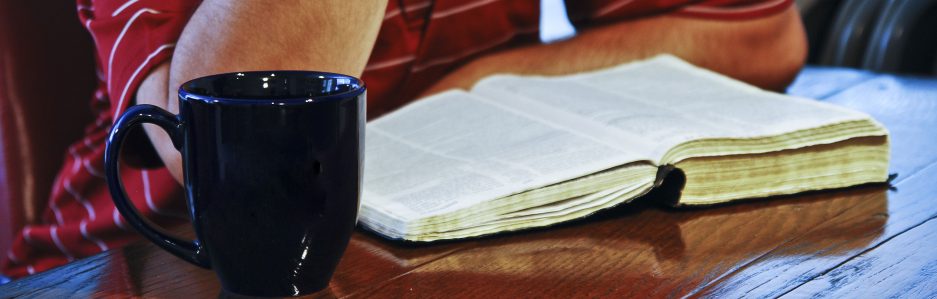
Homeschool Advice Part 7 | Read Aloud and Read a Lot

You don’t have to burn books to destroy a culture. Just get people to stop reading them.” – Ray Bradbury

If you do nothing else in your homeschool, teach your children to read. Basic math is also a must, and thinking critically about what they read is equal in importance, but reading itself is an incredible skill that cannot be overstated. Since reading the Bible should be the foundation and center of all we do, it goes without saying that a person cannot understand the Scriptures unless he or she knows how to read. So, read. And read aloud. Then read some more.

Read Aloud To Them

Long before your children are capable of tackling texts themselves, I highly recommend reading to them. There is an established correlation between parents who read aloud to their very young children and the child’s later reading comprehension. Children who experience the benefits of being read aloud to often go on to not only have greater literacy and comprehension rates, but tend to read for enjoyment more often as well.

But don’t stop too soon. So many parents cease reading aloud to their kids the moment the young reader has a basic grasp of phonics and can make their way through a beginner chapter book.

This is a grave mistake. Reading is actually difficult work involving decoding signs and symbols into meaning. Often, a child can decode the words into sensible sentences long before they are capable of actually processing the greater meaning of the whole.

But when a parent reads aloud to children, their brains are free to assimilate, process, and critically think about the concepts they are hearing. They also learn the rhythms of language, gain exposure to complex syntax and use of imagery, and hear how others distill thoughts, feelings, and observations into words.

So don’t stop reading to your children the moment they crack the code for the first time. By all means, allow them the privilege and excitement of reading for themselves. Yet supplement their early reading with what I always called read-alouds; books you share as a family, read aloud by the parent and enjoyed by all.

Also – don’t stop this practice in elementary school. Read aloud to your children as long as you can. You may be surprised how long they will enjoy it.

In actual practice, I read aloud to my children until they started attending private school (in 10th and 8th grades respectively). Our read-aloud time was one thing I missed the most when homeschooling ended, and the kids expressed fondness for those times as well.

Not only did reading aloud serve as a bonding time for us as a family, it also helped each of them develop literacy, exposure to new ideas, and develop a love for reading (which, of course, varies from the middle child who seeks out and reads obscure Shakespeare plays for fun to the oldest who enjoys more modern books).

Have Them Read Aloud to You

Besides the books you read to them, be sure you insist on each child reading aloud to you for a few minutes every day. Don’t just assume they are grasping their reading lessons; be certain of it. And again, don’t stop this practice in elementary school but continue it for the duration of your homeschool.

There are several ways to do this. One simple way is to have them read a page or two of their reading/ literature, history, or science textbooks. Another great practice is to have each child take turns reading from the Bible each morning.

By hearing your children read out loud, you can be aware of areas they are misinterpreting words, skipping over difficult words or passages, or catch a myriad of problems in their infancy. Children who read aloud and have their errors corrected on the spot, who are encouraged to sound out big words, develop greater confidence and competency. It’s worth the extra effort.

Read Good Books

No matter what age or stage your children are at, they can still benefit from being read to. My number one advice for choosing a book to read aloud is to choose good, quality books with stories that stand the test of time. And choose books that are one or two levels above your child’s own reading ability.

Practically speaking, in the very early years (preschool – third grade), you have a plethora of children’s chapter books to choose from. The Moffats and other books by Eleanor Estes are fabulous, as are books like Charlotte’s Web by E. B. White, Charlie and the Chocolate Factory by Ronald Dahl, and any number of children’s classics.

Do a Google search to find recommended reading lists for each grade, then choose one or more a grade or two ahead of your oldest student. In the elementary years, even young children can enjoy hearing books they may not yet be able to decode for themselves.

Note that in the elementary years, I personally recommend books that support Christian values. What you read to them will not only shape their minds but will contribute to shaping their worldviews. They are too young for abstract thinking, so be selective in your choices.

In late middle school, expand your read-aloud list to heftier material like The Screwtape Letters or Mere Christianity (7th-8th grades) by C. S. Lewis or Orthodoxy by G. K. Chesterton. These books may be beyond your child’s grasp, but reading them aloud and discussing them has a tremendous benefit. In books such as these, they hear the voices of Christian thinkers as well as men from another age and culture – all of which can serve your children well as their minds develop.

There is also great benefit to reading more controversial books aloud to middle school children. Don’t be afraid of what’s out there, but dive in, read it together, and examine it critically. Discuss what you read: Does the author champion a view that honors God? What parts of the book line up with Scriptural principles? Where does the book differ from God’s way? What is the main takeaway from this book? Are the themes, lifestyles, attitudes or actions those we should emulate or avoid? Why?

Don’t throw your kiddos to the wolves and hope they’ll figure it out for themselves. Jump in and wrestle it out with them.

Read Old Books

“Somebody who only reads newspapers and at best books of contemporary authors looks to me like an extremely near-sighted person who scorns eyeglasses. He is completely dependent on the prejudices and fashions of his times, since he never gets to see or hear anything else.” -Albert Einstein

One great service you can do for your children is to read older books. Take them back to a time when life was lived differently. Let them hear the flow of language, linger in the length of a long and luxurious sentence, and hear the tones, fashions, and moods of other periods in time.

By reading older books – especially when you spend time discussing what has been read – you help children see how cultural fads come and go. They can see how social norms may change but human nature never does. They are given a glimpse into the past and can learn that our modern ways of living and relating are not necessarily right just because they are current.

In short, they can learn what a small space each of us occupies, what truths endure and stand the test of time, and how true it is that “there is nothing new under the sun” (Ecclesiastes 1:9). A little humility goes a long way in learning how to think well, and books can be a great tool in learning it.

“Books serve to show a man that those original thoughts of his aren’t very new after all.” – Abraham Lincoln

Excerpt from My First (Really Bad) Book

So, here’s a public admission, if you will. I’m working on a book. It’s been a long time coming, in part due to health challenges and the general busy-ness of life. And I confess – it’s sometimes difficult to give time to projects (like this blog, for example) that don’t offer financial help to my overworked husband and my three college kids. Yet, I believe the Lord has told me to write the book, so write I will. I’m starting to get some traction, but most of my writing time is devoted to the book at present.

But, I don’t want to leave y’all totally alone! The truth is, I’ve written two books before – truly bad ones. I’ve learned much since those first efforts, so maybe this time will be different. It’s in the Lord’s hands – my lot is to obey. Nevertheless, even from a bad book, there are good elements. Below is an excerpt from my first ever book; a scene I still like for the way it illustrates the seriousness of sin.

I’ll set up the scene by saying the character, Liam, is a successful star of sorts who meets the love of his life, a young lady named Stace who is a believer. Though she loves him, she keeps him at a distance because she doesn’t want to yoke herself with a man who isn’t committed to seeking the Kingdom of God first – even though from a worldly perspective, he would be a “dream guy.” Toward the end of the book, a freak accident results in her death. As she’s dying, she prays for Liam to see what she sees, and he has a supernatural experience with the Risen Christ. And now, on with the show:

For a moment, the Man held this posture, His hand poised over Liam’s blood-stained one, then He raised his head and looked Liam directly in the eyes. And Liam’s reality splintered.

In a flash, Liam found himself in a garden. In some inexplicable way, he knew it was not just any garden; it was the Garden – Eden. Amazed, he looked around, inhaling deeply of heady aromas. Everywhere he looked, there was beauty; well-tended and lovingly nurtured. Many of the plants were either in flower or heavy with a wondrous variety of fruits. The temperature was pleasantly warm. Birds twittered and darted among the trees and insects buzzed in and around the flowering plants…

As he moved forward with a steadily increasing sense of awe, he saw a woman who could only be the first woman, Eve. Just as he was about to call out a greeting, Liam noticed that she was not alone. Apparently, she was deeply immersed in a conversation with a creature unlike anything Liam had ever seen, for neither of them glanced his way as he approached.

Taking advantage of their inattention, Liam stopped beside the low hanging branches of a tree and observed the creature closely. Although he could not understand the words, something in the silken tones of the creature’s voice was appealing, even soothing. As it spoke, it paced slowly before the woman, displaying its beautiful, scintillating scales to great advantage. However, to Liam’s eye, something in the sinuous way it moved as it spoke was suggestive of a snake. This must be the serpent.

Apprehensively, Liam took a step closer stopping only when he noticed that the woman and the beast were not alone. Nearby, a man sat leaning back against a tree, half-listening or perhaps pretending not to listen as he idly wound then unwound the tendrils of a vine around his finger.

As understanding struck him, Liam’s heart sank; he knew this story. It was one of the first he learned from the Bible.
Wait – could he stop this from happening? If he stopped this first great tragedy, would it save Stace? Maybe that’s why he’d been brought here!

Running to the woman, he tried to distract her, to warn her, but she seemed not to hear.  He whirled around to grab the man’s shoulders and haul him to his feet if necessary, but Liam’s hands passed through empty space. For the first time, he realized he wasn’t actually in the Garden. Rather, he was seeing a memory, painted in vivid color and for all the world like some sort of three-dimensional movie. Although he experienced the scene as if he were a part of it, he could neither interact nor interfere.

Sickened, he watched the woman listen attentively to the deceiver; watched her eyes growing thoughtful. Though her husband was still close enough to hear, hands now resting limply at his sides, he made no attempt to engage in the dialog.

Liam looked again at the woman. A subtle change was coming over her face. The childlike guilelessness he first saw began to harden, touched by a tinge of disdain. The serpent continued its ceaseless spiel, and her eyes began to drift toward a tree.

Suddenly, a Voice broke into the scene, “The tree she looks upon is the Tree of Knowledge of Good and Evil. The Tree of Life is not far away. Watch, and learn.”

Uselessly, Liam continued to watch as the woman moved toward the forbidden tree, watched her examine the fruit closely, weighing it in her palm as if the weight of consequence could be measured by the heaviness of the fruit. The subtle change he had begun to see in her face moments ago steeled into something so entirely modern that he reeled with the shock of it. He recognized it as the very look that had haunted him from his own mirror on so many occasions. It was a face filled with Pride; ruthless, stubborn, and petulant pride.

With the painfully familiar expression came another: doubt. Almost, Liam fancied, he could hear her inner dialog. Perhaps all the serpent had implied just might be true. Perhaps God was being stingy, withholding something that was good for them because He wanted no rival. Perhaps there would be no death. Such thoughts swam in her eyes as plainly as if printed there.

The woman took a bite of the fruit. Then, quickly as if she feared taking this step alone, she handed some of the fruit to the man who was with her, and he ate as well.

In that one, seemingly insignificant and ordinary act, the first man and woman turned their back on the One who had given them everything, even life itself.

A weight of horror settled on Liam, and he could only observe in futility as the shock of comprehension, then shame, distorted their faces. No longer did their expressions radiate an almost uncanny, beauteous innocence; no longer did their eyes dance with joy untainted with sorrow. 

The knowledge they’d craved did not bring the power they hoped. It never did. It never did. Oh, if only they had listened! He felt the ache of it so deep, he could hardly stand.

As the couple turned and fled deeper into the garden, Liam saw the discarded remnants of the fruit lying on the ground and he knew: Death had entered here.

Having rejected the Tree of Life for the one Tree forbidden them, they now knew they had chosen poorly and now their innocence had been ripped away leaving behind a ragged wound. The days of walking with their Creator in simple love and trust had ended. The horror and shame of what they had done drove them to try to hide from the God Who Sees.
Liam ached for them.

But quickly, other scenes flashed past with brutal intensity; the far-reaching consequences of one simple act of distrust until the mind-bending network of billions of sins and their consequences culminated in the ultimate price. Death, it is true, but a death like no other.

The Man – the same Man who had knelt by Stace – now raised in a gruesome display before a mob. This time, he wasn’t He clothed in intense white but caked in blood and dust, bearing on His head the very symbol of the curse of sin – branches of thorns twisted into a sick parody of a king’s circlet and shoved down over His brow, Blood from numerous scratches ran into His eyes.

God’s own Son, battered and torn, crowned with the unfathomable weight of countless sins, covered in shame and wretchedness that belonged to mankind – yet He wore it willingly. For the two rebels in the Garden. For all humanity. Even for the very ones who jeered from the crowd, He suffered humiliation and agony and Death.

For the first time, Liam understood the wonderful, terrible reality of the God who came to rescue those who rejected Him by paying the price of their insurrection with Himself.

And yet, still many did not believe. So many, oh so many, chose to believe themselves wiser, stronger, more progressive or modern or advanced than to believe in something so foolish as a God, never knowing that what they rejected was the glorious exhilaration of true Life. And such a Life—Life lived in harmony with the power, wonder, and endless love of the very Creator of life!

The scene shifted, and Liam saw himself ad a very young man; saw his mockery of his parents and his rejection of the two hard-working, plain people who loved him as best as they could. But he turned his back on them to become something more than a small-town hick. And Death entered that relationship.

He saw himself after his first big break, flattered by the attentions of many young ladies and reveling in his own sexual prowess, never once thinking of anything but his own pleasure. And Death stalked into many relationships.
He saw himself grow in fame and begin to wield some control over what roles he would accept, sometimes withdrawing like a sulky child when his whims were not met. And Death prowled among his business relationships, too.

Again and again, Liam watched countless moments of his own life; moments where he had chosen to feed his pride or flaunt his aptitude, often to another’s detriment and always to achieve a sense of personal victory. And side-by-side with each distinction and achievement as his self-importance swelled, Death walked through wide-open doors into many places in his life.

Finally, he saw himself waking alone in bed the morning before he had first met Stace, and he knew—the Thing that had stalked him when success and wealth failed to fill a deep void within; the Thing that clawed with hateful fingers at his throat and stifled his breathing – was Death.

For the wages of sin is death, but the free gift of God is eternal life in Christ Jesus our Lord (Romans 6:23, ESV).

Slave No More


For when you were slaves of sin, you were free in regard to righteousness. But what fruit were you getting at that time from the things of which you are now ashamed? For the end of those things is death.

Romans 6:20–21 (ESV)

A bit ago, a young man I admire made a social media post featuring a photo of a modern novel and verbiage indicating he couldn’t put it down. Always up for a good read, I mentally earmarked the book and snagged a copy before a little getaway.

The first paragraph of the book and its first sentence share dual primacy – a pleasant beginning for one who hungers for meaty sentences and an author who can carry a complex thought from initial capital through commas & semicolons, direct & indirect objects, lists, harmonizing subjects & verbs, delectable modifiers, and well-fleshed clauses all the way through to a satisfying conclusion ending in appropriate punctuation.

The book and I were off to a good start.

Then too much reality crept into the story, bringing with it the inevitable carnal brutality of a world under the curse. Admittedly, the dialog did fit the themes of 1990s-era video gamers and programmers, but as the plot progressed from two kids finding community around an old game console in a hospital to the female lead finding herself in an affair with an older (and married) man, I found myself quite able to put the book down.

Each time I laid it down, I grew more reluctant to pick it up again until I finally gave up about a third of the way in and dropped it into the library’s after-hours collection.

In fairness, the novel is well written. There are some excellent word pictures, a stark exploration of human relationships, and a unique backdrop built on the progression of video games. But I didn’t make it into the novel’s turn of the century.

So why did I find this novel – well written by my own admission – so put-downable? I believe it hit far too close to home for me. It wasn’t that I couldn’t relate to the characters; it was that the female character, despite having both the wealth and direction I lacked in my youth, struck a chord or two of familiarity. She was profoundly lost.

In fact, all the lead characters were lost. The college professor was not only lost but predatory, reminding me eerily of a time in young adulthood when I made an easy mark for a much older man – who just so happened to be into PC gaming. In the late 1990s, I even had a part to play in co-running a BBS (bulletin board system) running a multi-player Doom game over dial-up on additional phone lines run to my rental house. Close to home indeed.

The real-life version of the older man was also controlling, though much older and less appealing than the fictional character. Instead, he is part of the reason I never finished college and all of the reason the smells of whiskey and weed or the sound of a modem handshake make my stomach seize.

In fact, the book reminded me of far too many things of which I am now ashamed; things I long to impart to this younger generation filled with their guileless wonder at the complexity of life and relationships and the novelty of playing with fire, even if only vicariously. To each new generation, the world is new and interesting and relatively harmless – until it is not.

How can I relate this? There is no poetry wrought in the chains of sin, no charm in the Christless human condition, no velvet allure to the darkness. Without God, there is only need and hopelessness and a striving after the wind.

All streams run to the sea,
but the sea is not full;
to the place where the streams flow,
there they flow again.
All things are full of weariness;
a man cannot utter it;
the eye is not satisfied with seeing,
nor the ear filled with hearing.
What has been is what will be,
and what has been done is what will be done,
and there is nothing new under the sun.

Ecclesiastes 1:7–9 (ESV)

Perhaps redemption came in the novel. Perhaps the characters found hope outside of human love and mere friendship or success. Perhaps. But while the old memories it dredged up are helpful to remind me what I was saved from, I found more sorrow in the pages of the novel than beauty or interest.

I’m incredibly thankful to be free of that clutching, devouring darkness. What an indescribable gift to belong to the Light of the World who gives goodness, joy, and hope in place of ashes and chains! I can only pray for others to find the Way and follow it and be faithful to share how the Great Redeemer found me wearing slave’s shackles and set me free.

Wretched man that I am! Who will deliver me from this body of death? Thanks be to God through Jesus Christ our Lord!

Romans 7:24–25 (ESV)